


Building a Digitally Connected World: Solomon Brokerage’s Digital Logistics Transformation Across Latin America, the Middle East, and Europe
(*This article has been continuously updated to reflect our advancements. The last update in June 2026 incorporates our Digital Transformation endeavors.)
The Solomon Brokerage Firm, established in 2021 in Tallinn, Estonia, is advancing a transformative vision for global commerce: connecting producers and traders across Latin America, Africa, Asia, and the Middle East with European markets through standardized digital logistics infrastructure grounded in the European Union’s Electronic Freight Transport Information (eFTI) regulation. This vision is not theoretical—it is already taking concrete form through initiatives spanning Mexico, the Middle East, and Estonia, underpinned by a purpose of strategic government partnerships and a leadership team of recognized digital logistics experts.
The Solomon Brokerage Firm, established in 2021 in Tallinn, Estonia, is advancing a transformative vision for global commerce: connecting producers and traders across Latin America, Africa, Asia, and the Middle East with European markets through standardized digital logistics infrastructure grounded in the European Union’s Electronic Freight Transport Information (eFTI) regulation. This vision is not theoretical—it is already taking concrete form through initiatives spanning Mexico, the Middle East, and Estonia, underpinned by a purpose of establishing strategic government partnerships and a leadership team of recognized digital logistics experts.
Bridging Continents Through Digital Standards: The Solomon Brokerage Vision
The Problem: Fragmented, Inefficient Trade Infrastructure
Global freight transport remains trapped in an inefficient paradigm. Despite being primarily a private-sector business, transportation and logistics are regulated by individual states, creating a patchwork of disconnected systems. The consequences are severe: data loss during cargo transfers between carriers makes tracking goods nearly impossible, paper-based transportation information processes consume enormous amounts of time and resources, and inefficiencies cost Europe alone nearly €100 million daily—costs that ripple throughout global supply chains and disadvantage producers in emerging markets.
For traders and producers in Latin America, Africa, and Asia, these inefficiencies translate into higher costs, longer delivery times, reduced market competitiveness, and limited access to European and Middle Eastern markets. Small and medium-sized enterprises (SMEs) in these regions particularly suffer, lacking the technological infrastructure and capital to navigate complex, fragmented logistics networks.
The Solution: eFTI-Aligned Digital Transformation
The Solomon Brokerage Firm addresses this challenge by championing the adoption of the EU’s Electronic Freight Transport Information (eFTI) standards outside Europe—extending digital logistics best practices to Latin America, the Middle East, Africa, and beyond. Rather than imposing a one-size-fits-all approach, Solomon Brokerage partners with governments, trade organizations, and private-sector entities to implement interoperable digital gateways that enable verifiable, secure, real-time data exchange across borders and jurisdictions.
This approach transforms supply chains from paper-intensive, fragmented systems into transparent, digitally integrated ecosystems where data flows seamlessly, compliance is automated, and producers gain competitive access to global markets.

PREAMBLE
Global Trade Insights – Mini Podcast on Solomon Brokerage’s Efforts in Mexico:
Podcast’s referenced articles by Alejandro De La Parra Solomon, CEO of The Solomon Brokerage Firm:
Strategic Initiatives: Digitally Transforming Mexico
In December 2024, The Solomon Brokerage Firm undertook a strategic institutional mission from Tallinn, Estonia to Mexico City, engaging directly with Mexico’s Ministry of Economy (Secretaría de Economía) at the highest levels. The delegation met at different instances with Dr. Luis Rosendo Gutiérrez Romano, Undersecretary of International Commerce, to present both a comprehensive technical roadmap and a full legislative proposal for integrating the EU’s eFTI regulation into Mexico’s Foreign Trade Regulation (Reglamento de Comercio Exterior) and Customs Law (Ley Aduanera)—positioning digital logistics modernization as a binding legal framework rather than voluntary best practice.
This direct, in-person engagement, which continued in virtual meetings, demonstrates Solomon Brokerage’s institutional commitment to advancing digital supply chains across Mexico and Central America through authentic government partnership and collaborative development, not intermediaries or remote consulting. The company’s dual-track approach—combining technical implementation strategy with concrete legislative language—elevated the conversation beyond pilot projects to foundational regulatory reform. The proposals were directly delivered by The Solomon Brokerage Firm’s CEO, Alejandro De La Parra Solomon, not only to the Ministry of Economy but also escalated to Senator Beatriz Robles, President of the Mexico-European Union Joint Parliamentary Commission, and to José Antonio Peña Merino, Head of Mexico’s Digital Transformation & Telecommunications Agency (Agencia de Transformación Digital y Telecomunicaciones), ensuring buy-in across executive, legislative, and digital transformation leadership.
Following the Ministry meetings, Solomon Brokerage’s Founder and Chief Executive Officer, Alejandro De La Parra Solomon, and Co-Founder and Chief Communication Officer, Susanna Uusmaa, remained in Mexico City to deepen institutional engagement with the European Union’s presence in Mexico. The leadership team engaged directly with the Economic and Commercial Section of the EU Delegation to Mexico (Sección Económica y Comercial en la Delegación de la Unión Europea en México), working with the Section’s head, Viktoria Lövenberg, and participated in strategic Commission events and internal meetings with Ambassador Francisco André, the appointed Ambassador of the European Union to Mexico.
Furthermore, Solomon Brokerage leadership also engaged with the Inter-American Development Bank (IADB), meeting with Mexico representative Laura Ripani and her team to present the initiative. The Estonian firm simultaneously reached out to the United Nations Development Programme and the International Labor Organization to introduce the proposal, strengthen collaboration, and secure co-financing for this important digital transformation effort. In addition, Solomon Brokerage proposed an academic alliance to the Instituto Tecnológico y de Estudios Superiores de Monterrey (ITESM), via Héctor Adrián Núñez De Cáceres López, Vice President of Education for Development, to co-develop a digital logistics curriculum for undergraduate and postgraduate programs in international trade and logistics. The alliance proposed included inter-institutional linkage and collaboration with Estonia’s Tallinn Technical University of Applied Sciences and its Logistics Institute, where Solomon’s Partner and Logistics Director, Heiti Mering, regularly lectures on digital logistics.
Complementing the academic engagement, Alejandro De La Parra Solomon, Susanna Uusmaa, and Heiti Mering met directly with Guillermina Alvarado, Director General of the Consejo Nacional de Normalización y Certificación de Competencias Laborales (CONOCER) (National Council for Standardization and Certification of Labor Competencies, a governing body under Mexico’s Ministry of Public Education), and her executive team. The proposal advanced the creation of federally standardized, EU-aligned digital logistics competency frameworks and an integrated, modernized certification system to enhance efficacy and reduce operational costs across Mexico’s labor certification infrastructure. Critically, the initiative aimed to establish direct linkage to Estonian universities, enabling academic equivalence agreements that would allow Mexican CONOCER-certified professionals to compete directly for employment across European labor markets. This workforce development strategy ensured that Mexico’s eFTI regulatory alignment would be matched by federal-level workforce capacity building and direct labor market integration with European opportunities—evolving digital transformation into a comprehensive labor mobility and economic partnership framework.
This extended engagement was aimed at ensuring that the eFTI digital transformation initiative gained support across the full spectrum of European-Mexican stakeholder institutions, strengthening the institutional foundation for bilateral trade relationship deepening and regulatory alignment.
The roadmap emphasized concrete mechanisms through which eFTI-aligned digital logistics infrastructure could:
- Enhance Mexico’s competitiveness in global supply chains by reducing logistics costs, improving transparency, and accelerating border processing.
- Strengthen EU-Mexico trade relationships through regulatory harmonization and mutual digital standards recognition.
- Position Mexico as a regional digital commerce leader, enabling Central American nations to adopt compatible standards.
- Unlock market access for Mexican producers and SMEs to European buyers through verified, standardized digital platforms.
- Embed sustainability by integrating environmental compliance and circular economy principles into digital logistics workflows.
- Enhance workforce capacity and expand labor market access by delivering online digital transformation programs aligned with EU educational standards, with the goal of achieving mutual academic recognition between EU and Mexican institutions.
This multilevel institutional engagement—spanning Mexican executive, legislative, and digital transformation leadership on one side, and the EU Delegation, Ambassador-level diplomacy, and European Commission economic affairs on the other—validated Solomon Brokerage’s technical and legislative expertise and signaled serious, multi-stakeholder governmental commitment to positioning Mexico’s digital transformation as a strategic national priority aligned with EU standards and European trade partnership objectives.
Institutional Recognition in Mexico
The Mexican government has formally recognized this initiative. On July 22, 2025, Mexico’s Ministry of Economy issued an official Letter of Interest Manifestation, formally recognizing The Solomon Brokerage Firm as “a strategic ally for the promotion of initiatives and programs of technology and knowledge transfer” in sustainability, green logistics, and circular economy. The letter was issued by Lic. Rafael Salas Vázquez, Director of Monitoring and Follow-up and Head of Sustainability and Circular Economy Sector at the time of the letter’s issuance, following direct engagement with the Ministry’s leadership.
The Mexican Ministry of Economy’s support includes:
- Institutional facilitation of event spaces and workshops
- Dissemination of Solomon Brokerage activities through official Ministry communication channels
- Participation of Ministry representatives in educational and technical forums
- Collaboration in designing circular economy, green logistics, and industrial sustainability programs
- Authorization to use the Ministry’s support letter for accessing international funding and public-private partnerships
This governmental backing demonstrates recognition that digital logistics transformation directly advances Mexico’s economic competitiveness, sustainability objectives, and integration with European trade standards.
Supporting this initiative, the Honorary Consulate of Estonia in Mexico, represented by Martín Enrique Torres Lara, Honorary Consul of Estonia in Mexico, issued an official recognition letter (July 28, 2025) affirming support for the Digital Transformation initiative. The Consulate specifically valued the initiative’s role in “promoting European eFTI standards, advancing sustainable logistics, and fostering academic exchange between Estonia and Mexico.”





Continued Expansion Efforts: Digital Transformation in Central America & the Caribbean
The continued efforts of Solomon Brokerage’s Mexico engagement catalyzed a broader institutional vision: establishing a center for Latin American Digital Transformation. Rather than confining eFTI-aligned digital transformation to Mexico alone, Alejandro De La Parra Solomon and the Solomon Brokerage leadership extended their institutional engagement to advance digital logistics modernization across Central America, the Caribbean, and beyond.
Expanding to Central America:
SIECA and the Regional Master Plan for Mobility and Logistics 2035
Recognizing Central America’s critical role in inter-regional trade corridors, Solomon Brokerage formally engaged the Inter-American Development Bank to present a comprehensive strategic collaboration proposal for the Secretaría de Integración Económica Centroamericana (SIECA)—the Central American Economic Integration Secretariat. The engagement included outreach to IADB’s Andrés Felipe Caicedo Toro, Investment Officer at IDB Invest, positioning the digital transformation initiative as an IDB Lab’s Ecosystem grant-qualified project, seeking their support as a potential catalytic partner for the regional mobility and logistics agenda.
The core proposal positioned the initiative for integration into Central America’s Regional Master Plan for Mobility and Logistics 2035 (P/M), with SIECA’s Transport, Infrastructure and Logistics Directorate (DITIL) as a key implementation partner. The initiative’s strategic value to SIECA and the region included:
- Accelerating P/M Implementation: Providing digital transformation expertise and eFTI standards implementation to modernize regional logistics and supply chain efficiency.
- Institutional Capacity Strengthening: Deploying technical expertise and human capital development to fortify SIECA/DITIL as the technical secretariat for the P/M.
- Investment Facilitation: Positioning the digital trade initiative as a catalyst for the P/M’s Cooperating Partners Forum, enhancing the attractiveness of regional digital logistics projects to private investment and public-private partnerships (PPPs).
- Advanced Standards Implementation: Introducing eFTI-aligned digital gateways and interoperability frameworks essential for seamless cross-border logistics across Central American jurisdictions.
- Structural Problem Solving: Addressing documented P/M implementation challenges including technical capacity gaps, private-sector awareness, and technology adoption barriers.
The proposal outlined a phased approach beginning in Q3 2025, with pilot programs designed to validate concepts and demonstrate tangible impacts before scaling across the region. This engagement elevated Central America’s digital logistics transformation from aspirational policy to concrete, expert-led implementation, with the initiative positioned as an essential technical and governance partner.
Strategic Engagement with El Salvador: Multi-Track Digital Transformation
Academic and Professional Certification Framework
During May 2025, Alejandro De La Parra Solomon engaged José Miguel Hernández, President of the International Relations Committee of El Salvador’s University UNASA (Universidad Autónoma de Santa Ana), to advance a complementary digital transformation initiative focused on professional certification modernization. The proposal outlined an integrated professional certification management system designed to streamline certification processes across El Salvador’s academic consortium and government regulatory bodies (MINEDUCYT), proposing the modernization of the curriculum with additional digital logistics programs based on Estonia’s experience.
The system architecture encompassed three integrated operational layers:
- For Individual Applicants: Online application submission, digital document uploads, real-time process tracking, electronic payment processing, digital certificate downloads, and a personalized competencies portal—enabling transparent, efficient access to professional credentialing.
- For Certifying Institutions: Comprehensive evaluation process management, examination scheduling, results registration, certificate issuance, and activity reporting—standardizing quality control and institutional coordination across the UNASA academic consortium and MINEDUCYT-authorized certifying bodies.
- For the UNASA Academic Consortium and MINEDUCYT: Centralized institutional supervision, standardized quality management, statistical analysis, quality assurance controls, and comprehensive management reporting—ensuring systemic governance, data integrity, and compliance with El Salvador’s education and technology ministry standards.
This certification system proposal directly aligned with the initiative’s broader labor formalization and digital inclusion mandate, positioning professional credentials as a foundational infrastructure for workforce development and regional supply chain competency standards.
Government Investment and Trade Partnership
Complementing the multilateral SIECA and academic engagement, Alejandro De La Parra Solomon delivered a targeted proposal to Jessica Bukele, Deputy Investment Director at Invest in El Salvador, positioning El Salvador as a strategic entry point for the initiative’s broader Central American ambitions. The proposal centered on technology transfer and knowledge sharing to empower El Salvador’s logistics sector through data democracy and transparency—transferring European eFTI standards expertise (led by Heiti Mering, founder of Estonia’s Digilogistika Keskus and co-architect of the EU eFTI initiative) while tropicalizing these standards to align with Latin America’s institutional, regulatory, and socioeconomic contexts. The engagement emphasized integrated innovation across commerce, logistics, and transport systems, positioning the initiative as a catalyst for modernizing El Salvador’s supply chain infrastructure while maintaining alignment with regional sustainability and democratic governance principles. The proposal formally requested a dedicated working meeting with Bukele and El Salvador’s government investment team to present the full vision, identify implementation pathways, and establish a government-private partnership framework for pilot deployment.
Caribbean Expansion:
Dominican Republic Digital Transformation and Circular Economy Integration
Simultaneously, Solomon Brokerage extended its regional reach to the Dominican Republic, where Alejandro De La Parra Solomon led strategic engagement with multiple multilateral and government institutions. The Dominican initiative uniquely integrated digital logistics modernization with circular economy development and labor market inclusion—creating a holistic approach to sustainable development aligned with ILO and UNDP objectives.
During August 2025, Solomon Brokerage formally engaged:
- The United Nations Development Programme (UNDP) in Santo Domingo, meeting with Julisssa Lopez, Project Specialist, Sustainability and Environment Unit, to present digital transformation initiatives directly aligned with the UNDP’s sustainable development mandate.
- The International Labor Organization (ILO) in the Dominican Republic, led by Katherine Martínez, National Coordinator (Coordinadora Nacional). The engagement positioned the digital trade initiative as aligned with ILO’s Skills Strategy and Lifelong Learning 2030, emphasizing workforce development, labor market formalization, and digital inclusion.
- The Santo Domingo East Municipality (Ayuntamiento de Santo Domingo Este), engaging Milton Olivo, UNDP representative at the Dirección de Desarrollo Municipal, under Alcalde Dioris Anselmo Astacio Pacheco. Alejandro De La Parra Solomon delivered formal proposals for the integrated digital waste management and circular economy platform to Santo Domingo Este and Boca Chica municipalities, leveraging municipal development infrastructure for scaled pilot implementation.
The Dominican Republic proposal integrated three complementary pillars:
- Digital Logistics & eFTI Implementation: Advancing EU-standard digital freight transport documentation aligned with the Dominican government’s modernization objectives and international trade competitiveness.
- Circular Economy & Waste Management Digitization: Partnering with Gabriel G. Alarcón, CEO of Productora GARD RD SRL (a local sustainability enterprise), Solomon Brokerage proposed a comprehensive digital waste management and circular economy platform for the Dominican Republic. The initiative addressed structural challenges in waste collection, informal recycler integration, and municipal efficiency through IoT monitoring systems, route optimization algorithms, and digitized payment processes. The proposal emphasized formalizing informal waste sector workers through certified digital skills training aligned with European standards.
- Workforce Development & Labor Market Access: Deploying a Learning Management System (LMS) with EU-standard curricula covering digital logistics, e-governance, circular economy principles, sustainability, and artificial intelligence. This element directly addressed ILO objectives of labor formalization, skills development, and economic inclusion for vulnerable populations, particularly informal waste workers and SME employees.
The Dominican Republic proposal detailed a comprehensive financing strategy, with planned co-financing sourced through BID Lab programming and local public-private partnership structures. The legal framework leveraged Dominican legislation, including Ley 189-11 (Integral Solid Waste Management Law) and Ley 225-20 (National Waste Management Policy), positioning the initiative within existing regulatory architecture.
Regional Leadership & Institutional Coordination
This multilateral institutional engagement—spanning IADB, SIECA, UNDP, and ILO—validated the initiative’s capacity to operate as a genuinely regional effort, extending Solomon Brokerage’s technical and institutional expertise across diverse governance contexts, from Central American trade integration to Caribbean sustainable development and labor market modernization. The regional expansion demonstrated that eFTI-aligned digital transformation could be tailored to address region-specific development priorities—whether regulatory modernization in Mexico, logistics integration in Central America, or circular economy and labor inclusion in the Caribbean—while maintaining alignment with EU standards and European partnership frameworks.


European Digital Trade Center (EDTC): Connecting Portugal, Latin America, and Africa
Building on the experience in Mexico, Solomon Brokerage has recently promoted the establishment of the European Digital Trade Center (EDTC). Since summer 2026 and under the leadership of Alejandro De La Parra Solomon, the EDTC initiative has formally begun strategic outreach to diverse Portuguese organizations including the Port of Aveiro, Private Fintech and Digital Ecosystems Partnerships, Investment Bank, and other prominent organizations and venture capital firms to advance the EDTC as a national and regional hub for digital logistics transformation and a bridge connecting Latin American, Asian and African producers with European markets.
The EEDTC’s mission directly aligns with Portugal’s and the European Union’s Digital Agendas, focusing on:
- Digital economy modernization and trade infrastructure enhancement
- International trade competitiveness through standardized logistics platforms
- Supply chain resilience for critical infrastructure sectors
- Sustainable, ethical business practices aligned with ESG standards and international trade norms
- Institutional governance excellence supporting public-private partnerships
The EDTC aims to operate on two core verticals:
- Technology Development & Implementation: Focused on eLogistics and eFTI standards adoption, eFTI-certified systems, supply chain modernization, Industry 4.0 integration. It aims to connect Portugal’s eFTI Gateway with a digital marketplace, an advanced blockchain Digital Trade & Logistics Micro-Financing (DTLMF) platform, an Innovation Hub aimed to be established at the Port of Aveiro, and comprehensive fair trade solutions.
- Education & Capacity Building: Dedicated to professional certification, learning management systems, and knowledge transfer from Estonia. It aims to deliver an online learning platform, certification management systems, specialized curricula in digital logistics, supply chain management, trade finance, and other relevant subjects.
The EDTC initiative is also proposing the development of the Meridian Gateway, a mixed-use residential and commercial complex strategically positioned near the Aveiro Technology Free Zone (TFZ). The project targets international business leaders from Europe, Latin America, Asia, and Africa seeking to expand into European markets. By combining premium facilities in close proximity to the TFZ, the Meridian Gateway offers luxury amenities, business facilities, and logistical advantages that entrepreneurs require. The initiative reinforces EDTC’s broader mission: enabling international trade and digital transformation through cutting-edge, sustainable logistics standards—including frameworks like eFTI.


Middle East Digital Transformation Centre: Connecting the Middle East, Latin America, and Europe
Building on the experience in Mexico, Solomon Brokerage has recently promoted the establishment the Middle East Digital Transformation Centre (MEDTC). Since summer 2026 and under the leadership of Alejandro De La Parra Solomon, the MEDTC initiative has formally begun strategic outreach to the diverse Middle East organizations including Free Zone Authorities, Private Fintech and Digital Ecosystems Partnerships, Investment Bank, and other prominent organizations and venture capital firms to advance the MEDTC as a regional hub for digital logistics transformation and a bridge connecting Latin American, Asian and African producers with Middle Eastern and European markets.
The MEDTC’s mission directly aligns with Middle East’s Digital Agendas, focusing on:
- Digital economy modernization and trade infrastructure enhancement
- International trade competitiveness through standardized logistics platforms
- Supply chain resilience for critical infrastructure sectors
- Sustainable, ethical business practices aligned with ESG standards and international trade norms
- Institutional governance excellence supporting public-private partnerships
The MEDTC aims to operate on two core verticals:
- Technology Development & Implementation: Focused on eFTI standards adoption, digital gateways, supply chain modernization, Industry 4.0 integration. It aims to deliver an eFTI Gateway, a digital marketplace, an advanced blockchain Digital Trade & Logistics Micro-Financing (DTLMF) platform, an Innovation Hub aimed to be established at a Free Zone, and comprehensive fair trade solutions.
- Education & Capacity Building: Dedicated to professional certification, learning management systems, and knowledge transfer from Europe and Estonia. It aims to deliver an online learning platform, certification management systems, specialized curricula in digital logistics, supply chain management, trade finance, and other relevant subjects.
The MEDTC initiative is also proposing the development of the Meridian Gateway, a mixed-use residential and commercial complex strategically positioned near a Free Zone. The project targets international business leaders from Europe, Latin America, Asia, and Africa seeking to expand into Middle Eastern markets. By combining premium facilities in close proximity to a Free Zone, the Meridian Gateway offers luxury amenities, business facilities, and logistical advantages that entrepreneurs require. The initiative reinforces MEDTC’s broader mission: enabling international trade and digital transformation through cutting-edge, sustainable logistics standards—including frameworks like eFTI.

The Leadership: Recognized Expertise in Digital Logistics Transformation
The Solomon Brokerage Firm acting as leading members of these regional digital transformation initiatives represent a uniquely qualified consortium bridging European digital expertise, international business capability, and regional market knowledge. Each leader brings internationally recognized credentials and proven track records:

Heiti Mering: Global Authority on Digital Freight Transport Standardization
Heiti Mering serves as Chief Logistics & Systems Officer, bringing over 30 years of expertise in logistics infrastructure, information systems architecture, and digital transformation. Most significantly, Heiti is officially recognized by the European Commission as a leading expert on eFTI (Electronic Freight Transport Information) standards.
His credentials include:
- Official eFTI Advisor to the European Commission: Providing strategic guidance on digital freight transport standardization, regulatory architecture, and cross-border implementation.
- Co-Leader, eFTI4EU and eFTI4ALL Flagship Projects: Orchestrating practical implementation of eFTI directives across 20+ European countries in collaboration with the Estonian Ministry of Climate.
- Founder, Digillogistika Keskus (Digital Logistics Center of Excellence): Establishing a Tallinn-based competence center bridging international freight service providers and government control bodies.
- Visiting Lecturer, Tallinn University of Technology: Leading transport and logistics curriculum development.
Heiti’s role is critical to he mission of these digital transformation initiatives: as an official EU advisor with hands-on experience implementing eFTI across diverse European jurisdictions, he brings unparalleled institutional knowledge of eFTI standards, regulatory frameworks, and practical deployment approaches essential for extending digital logistics standards beyond Europe.

Alejandro De La Parra Solomon: Strategic Operations & Digital Transformation Leadership
Alejandro serves as Founder and CEO of The Solomon Brokerage Firm and directs strategy and government engagement at the Digital Trade Center initiative, bringing over 20 years of expertise in regulatory compliance, international trade law, and cross-border supply chain modernization across various companies, including The Solomon Brokerage Firm, which began as a family initiative in 2013. His background combines advanced education in international business, strategic technology management, supply chain finance, and sustainable development (from the University of Illinois Urbana-Champaign, New York Institute of Finance, and Johns Hopkins University).
Core competencies aligned with the digital transformation mission:
- eFTI Standards Implementation: Direct expertise in EU Electronic Freight Transport Information standards deployment outside Europe.
- Cross-Border Regulatory Navigation: Comprehensive compliance research across EU and Latin American markets, including international trade law, AML/KYC protocols, and government permitting.
- Digital Transformation Governance: Enterprise digital strategy and technology governance frameworks aligned with data security and institutional integrity standards.
- Multi-Jurisdictional Leadership: holding director roles in chambers of commerce, logistics and education committees in various regions, bridging commerce across continents.
Alejandro’s strategic mandate directly supports Mexico’s long term development plan “Plan México” and Digital Agendas, as well as international trade competitiveness by modernizing supply chain infrastructure through paperless, digitally transparent systems and facilitating private-public partnerships that accelerate digital adoption across government and commercial sectors.

Ivar Keskpaik: Supply Chain Resilience & AI-Driven Logistics
Ivar Keskpaik serves as Chief Supply Chain Officer, with over 20 years specializing in mission-critical supply chains for defense, healthcare, pharmaceutical, and critical infrastructure sectors. Co-CEO of Q-Responsify (Dual Ops), a Tallinn-headquartered AI and software solutions firm, Ivar brings advanced expertise in:
- Theory of Constraints (TOC) Optimization: Certified TOC practitioner with proven track record delivering 40%+ productivity improvements and 70%+ efficiency gains across pharmaceutical, retail, and logistics operations.
- AI-Driven Logistics Solutions: Leading strategic software development and AI applications enabling critical organizations to achieve operational resilience through intelligent systems.
- Defense & Critical Infrastructure Expertise: Specialized experience in supply chain resilience for high-security, mission-critical environments directly aligned with the LATAM and Middle Eastern strategic priorities.
- Multi-Jurisdictional Transformation: Proven capability optimizing supply chains across Baltics, Russia, Ukraine, EU, and now Latin America amid diverse regulatory and geopolitical contexts.
Ivar’s expertise positions these digital transformation initiatives outside of the EU as a technology-forward advisor capable of delivering next-generation logistics capabilities combining eFTI standards compliance with AI-enabled supply chain optimization.

Susanna Uusmaa: Sustainability, Ethics & International Trade Leadership
Susanna serves as Chief Sustainability & Ethics Officer at the Digital Trade Center initiative, bringing 6+ years of progressive business operations across 5+ countries combined with advanced scientific credentials in gene technology, biomolecular sciences and ecology, and neuroscience. As Chief Communications Officer and Co-Founder of The Solomon Brokerage Firm, Susanna bridges scientific rigor with commercial excellence:
- International Trade Expertise: Hands-on experience in regulation-aligned wholesale commodities trading across energy, agriculture, precious metals, and renewable energy sectors.
- Sustainable & Ethical Commerce: Commitment to transparent, ethics-grounded trading practices aligned with European and LATAM sustainability objectives and international environmental standards.
- Healthcare & Biomedical Innovation: Advanced research background enabling credible advisory on healthcare supply chains and pharmaceutical logistics modernization.
- Digital Innovation & Governance: Expertise in data governance, patient privacy protection, and AI-assisted solutions for critical applications.
- Stakeholder Engagement & Communications: Proven capability in building investor confidence, managing regulatory relationships, and positioning organizations as industry authorities.

The EU’s eFTI Regulation: The Technical Foundation
Understanding the technical foundation of Solomon Brokerage’s approach requires understanding the EU’s Electronic Freight Transport Information (eFTI) Regulation (EU 2020/1056), adopted in 2020 and coming into full effect on July 9, 2027.
What is eFTI?
eFTI is a transformative regulatory framework establishing standardized electronic freight transport documentation across all modes of transport (road, rail, maritime, air) throughout EU member states. Key features include:
- Standardized Data Elements: Defined by regulation rather than complete documents; parties access only necessary information. Reduces data exposure while ensuring compliance.
- Content Requirements & Data Security: Competent authorities must accept electronic freight documents as proof of compliance. Establishes trust in digital systems across jurisdictions.
- Mandatory by July 2027: Full implementation across EU; private operators currently participating voluntarily. Creates urgent need for third-country alignment.
- Interoperability: National eFTI gateways connect competent authorities, platforms, and economic operators. Enables seamless cross-border trade.
Benefits for the private sector include:
- Cost savings of 50–65% by replacing paper documents with digital data processing.
- Automation of manual data processing and elimination of duplicate data entry.
- Automatic matching of transferred messages (order–invoice, consignment–invoice, receipt–invoice).
- Elimination of data lookup errors, accelerating business processes.
- No need for new IT systems: Simply connect to the service and begin transferring data.
Benefits for governments include:
- Remote road control automation (overload detection, hazardous goods tracking).
- Automated taxation of transport services.
- Event-based statistical reporting on trade flows and supply chain metrics.
- Environmental impact automation tracking waste management and sustainability compliance.
- Enhanced emergency response: Real-time information on dangerous goods shipments.

The Digital Marketplace & Gateway: Connecting Global Producers
Solomon Brokerage’s core innovation is the a Digital Marketplace and Gateway concept based on eFTI standards—a digital environment connecting certified trade, logistics, and transportation companies across Latin America, Africa, Europe, the Middle East, and Asia through EU-compliant, secure data exchange mechanisms.
The Digital Gateway Architecture
The gateway operates on a multi-layered model:
- Layer Function Participants (Regulatory bodies, government standards authorities): Data Models (eFTI Standards) Standardized data formats, business rules, legislation, and policy strategy.
- Gateway-to-Gateway (G2G) (National eFTI gateways, competent authorities, international bodies): Government/authority network exchanging messages, records, validated data; eFTI service registry; authority access points.
- Business-to-Gateway (B2G) (Trade companies, logistics providers, transportation operators): eFTI platform services, database, logistics operator access.
- Business-to-Business (B2B) (Shippers, freight forwarders, carriers, consignees): Enterprise resource planning, order management, electronic invoicing.
- Public Registers (Government agencies, regulatory bodies): Integration with transport equipment registries, tax/employment records, population registries, company registries, environmental registries.
The Digital Marketplace Features
- Operator Integration & Certification: Only trade, logistics, and transport companies certified by the eFTI gateway participate, ensuring transaction integrity and quality. This certification requirement builds trust while maintaining operational flexibility.
- Trade Security: Advanced security protocols guarantee that all domestic and international operations are safe, reliable, and compliant with international standards. Data immutability through blockchain and distributed storage ensures auditability and compliance.
- Globalization & International Access: Designed to facilitate international trade, the marketplace enables companies to expand and connect across diverse global markets—directly addressing the challenge of producers and SMEs in Latin America, Africa, and Asia accessing European and Middle Eastern markets.
- Regulatory Alignment: All operations comply with EU eFTI standards, ensuring quality and uniformity. This standardization paradoxically increases flexibility by establishing common rules that enable innovation and market entry.
- Commercial Process Optimization: The marketplace digitizes commercial processes by integrating with national eFTI gateways and connecting to EU and international gateways, reducing time and cost while improving coordination among trade, logistics, and transport participants.

Trade Bridges: EU-LATAM Trade Frameworks
Solomon Brokerage’s initiatives operate within established and emerging trade frameworks that make digital logistics transformation strategically aligned with government objectives:
EU-Latin America Trade Relations
The EU and Latin America maintain deep trade relationships, with the EU being a major trade partner for most LATAM nations. Key frameworks include:
- Trade Agreements: The EU has negotiated or is negotiating trade agreements with Mercosur (Argentina, Brazil, Paraguay, Uruguay), Peru, Colombia, Chile, and other LATAM countries, focused on tariff reduction, regulatory harmonization, and supply chain integration.
- Economic Partnership Agreements (EPAs): These frameworks establish rules of origin, customs procedures, and regulatory alignment essential for trade efficiency.
- Sustainability & Circular Economy: EU trade agreements increasingly prioritize environmental standards and sustainable supply chain practices—directly aligning with Solomon Brokerage’s focus on sustainable digital logistics.
- Development & Cooperation Funding: The EU-LAC Dialogue and EU funding mechanisms (such as those managed through the Inter-American Development Bank) support capacity-building and digital infrastructure projects in Latin America.
For Mexico specifically, the EU-Mexico Global Agreement (updated 2018) establishes a comprehensive trade and cooperation framework. The Mexican government’s official recognition of Solomon Brokerage—through the Ministry of Economy’s Letter of Interest Manifestation—demonstrates Mexico’s strategic priority to align with EU standards in logistics, sustainability, and digital transformation. Mexico, as a major manufacturing hub and logistics gateway to North America, stands to gain enormously from eFTI-aligned digital infrastructure that seamlessly connects Mexican producers with European markets.
GCC-EU Trade Relations & the Middle East’s Strategic Position
The Gulf Cooperation Council (GCC) plays a pivotal role in bridging Middle Eastern, European, Latin American, and Asian trade. The Middle East has positioned itself as a global logistics and trade hub through:
- Free Zones & Trade Facilitation: The Middle East operates multiple free zones attracting international traders and reducing customs barriers.
- Port Infrastructure: Middle East ports rank among the world’s busiest, serving as transshipment hubs for goods between Europe, Asia, Africa, and the Americas.
- Digital Economy Initiatives: The UAE Digital Agenda 2030 and Dubai’s Smart City initiatives, to name a few, demonstrate governmental commitment to digital transformation in commerce and logistics.
The establishment of the Digital Trade Center initiative directly supports the region’s strategic objectives by positioning it as a center of excellence for digital logistics transformation, attracting regional and global trade participants from the Global South.
Africa & Asia: Emerging Importance
Solomon Brokerage’s vision explicitly includes African and Asian producers and traders. The Africa International Chamber of Commerce & Industry (AICCI), with which Heiti Mering serves as Global Chairman of the Logistics & Transportation Committee, provides institutional connectivity to African markets. Similarly, the company’s experience across Asia-Pacific contexts positions the Digital Trade Center initiative to facilitate:
- South-North trade: Direct connections between African, Asian, Latin American, and Middle Eastern producers, improving on European trade environments.
- Regional logistics hubs: Strategic positioning of digital transformation initiatives in major European, Latin American, Middle Eastern, African, and Asian ports and trade zones.
- Supply chain shortening: Enabling European, Latin American, Middle Eastern, Asian, and African manufacturers to connect directly with the European Union through certified e-marketplaces.
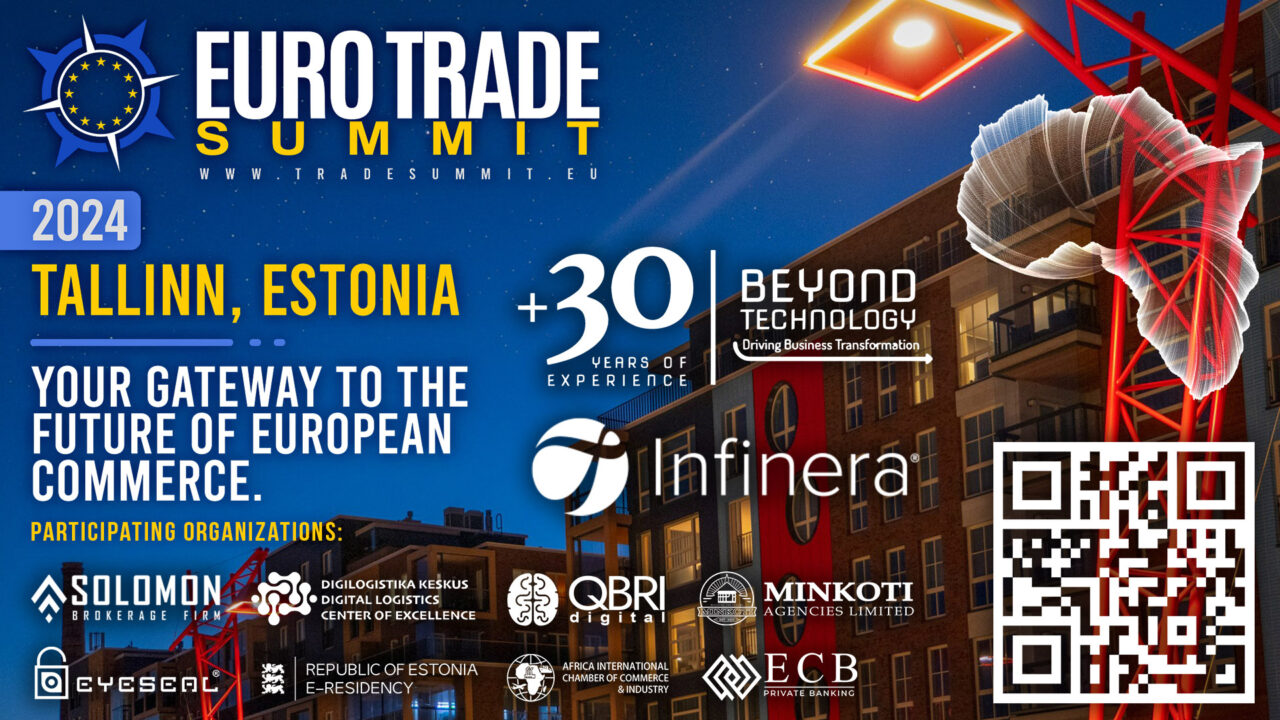
The Euro Trade Summit 2024: Introducing Digital Logistics to Global Markets
In 2024, Solomon Brokerage organized the Euro Trade Summit (https://tradesummit.eu), a high-profile international conference held in Estonia, designed to introduce foreign entities to digital logistics standards and sustainable trade practices. The summit brought together:
- Government officials from EU member states, LATAM nations, Africa, Asia, and Middle Eastern countries
- Trade organizations and chambers of commerce from multiple continents
- Technology providers specializing in logistics digitalization and supply chain solutions
- Academic institutions and research centers focused on sustainable development and trade
- Corporate leaders from manufacturing, logistics, trading, and financial services sectors
- Development organizations and multilateral institutions supporting trade capacity-building
The Euro Trade Summit achieved multiple strategic objectives:
- Regulatory Awareness: Educated international participants on the EU’s eFTI Regulation and its transformative potential for global logistics.
- Knowledge Transfer: Shared practical implementation approaches from European pilot programs with participants from emerging markets.
- Network Building: Created institutional relationships between government bodies, private-sector companies, and trade organizations across continents.
- Market Development: Identified opportunities for digital logistics platform deployment in strategic regions.
- Thought Leadership: Positioned partner organizations as authoritative voices on sustainable digital transformation in global trade.
Following the success of the 2024 summit, Solomon Brokerage is now planning a Euro Trade Summit 2027 event in Portugal (to be defined), promoting the establishment of a European Digital Trade Center and strengthening digital logistics adoption across the European Union, enabling better trade with Latin America, the Middle East, Asia, and Africa. This upcoming event will further consolidate the initiative’s position as a regional hub for digital supply chain excellence.
A Transformative Vision for Global Trade
The world’s trade infrastructure stands at an inflection point. The European Union’s eFTI Regulation represents not merely a technical update to logistics documentation but a fundamental reimagining of how global commerce operates—from opaque, fragmented, paper-dependent systems to transparent, interoperable, digitally-verified networks enabling secure, efficient trade across borders and jurisdictions.
The Solomon Brokerage Firm, through its initiatives in the European Union, Latin America and beyond, is translating this vision into reality. By championing eFTI standards adoption outside Europe and establishing regional digital transformation centers in strategically important trade hubs, Solomon Brokerage is:
- Democratizing access to global markets for producers and SMEs in the European Union, Latin America, Africa, and Asia—enabling them to compete directly with established suppliers rather than relying on intermediaries.
- Reducing friction and costs in international trade through digital standardization and process automation—ultimately benefiting consumers and producers alike.
- Building institutional capacity for digital governance and trade management across emerging markets—ensuring sustainable, long-term development rather than dependence on external consultants.
- Advancing sustainability and ethical trade by embedding transparency, compliance, and environmental responsibility into digital infrastructure rather than treating them as afterthoughts.
- Strengthening geopolitical relationships through trade partnership—the most enduring form of international cooperation—by positioning technology as a bridge rather than a barrier.
The leadership team—Heiti Mering as Europe’s eFTI authority, Alejandro De La Parra Solomon as strategic implementation expert, Ivar Keskpaik as supply chain resilience engineer, and Susanna Uusmaa as sustainability and ethics champion—represents the precise combination of expertise, credibility, and vision required to successfully implement this transformation at global scale.
The path forward is clear: As EU eFTI standards become mandatory across Europe (July 2027) and increasingly expected by multinational corporations and financial institutions globally, emerging market governments and traders face a strategic choice. They can:
- Resist digitalization, remaining trapped in inefficient, expensive, paper-dependent systems increasingly isolated from global supply chains.
- Adopt proprietary solutions, creating new digital silos and perpetuating fragmentation.
- Embrace eFTI-aligned standards, joining a globally interconnected ecosystem where producers compete on quality and price rather than bureaucratic access and intermediary relationships.
Solomon Brokerage offers a proven pathway for the third option—supported by governmental recognition, institutional partnerships, and internationally credentialed leadership committed to sustainable, transparent, and inclusive digital transformation.
As trade flows increasingly through digital channels and supply chains continue globalizing, the infrastructure proposed by Solomon Brokerage today will shape competitive dynamics for decades to come. Organizations, governments, and regions that embrace this transformation will thrive. Those that resist will find themselves increasingly marginalized in a digitally-connected global economy.
The Digital Trade Center initiative and the broader Solomon Brokerage vision represent not merely business opportunities but strategic imperatives for governments and organizations committed to economic competitiveness, sustainability, and inclusive prosperity in the 21st-century global economy.
References & Sources
EU Legislation & Official Regulations
European Commission – eFTI Regulation (EU 2020/1056):
https://eur-lex.europa.eu/legal-content/EN/TXT/?uri=CELEX:32020R1056
European Commission – Official Directive on Electronic Freight Transport Information:
EUR-Lex – Complete eFTI Directive Text:
https://eur-lex.europa.eu/eli/dir/2010/40/oj
eFTI Implementation Projects & Initiatives
eFTI4EU – EU-Wide eFTI Implementation Project:
eFTI4All – Global eFTI Extension Project:
European Commission – Digital Logistics & Supply Chain Initiatives: Digital Transport and Logistics Forum (DTLF)
Estonian Ministry of Climate – eFTI & Digital Logistics Programs:
https://kliimaministeerium.ee/en
Trade Agreements & Policy Frameworks
EU-Mexico Global Agreement – Trade Relations Framework:
https://ec.europa.eu/trade/policy/countries-and-regions/countries/mexico/
EU-Mercosur Association Agreement (negotiations):
EU-Gulf Cooperation Council Trade Relations:
World Trade Organization | World Tariff Profiles:
https://www.wto.org/english/res_e/reser_e/tariff_profiles_e.htm
Supply Chain Standards & Frameworks
UN/CEFACT – Electronic Data Interchange Standards for International Trade:
ISO 20022 – Universal Financial Industry Message Scheme:
GS1 Standards – Global Standards for Supply Chain:
IATA Cargo – International Air Transport Association Logistics Manuals, Standards & Regulations:
https://www.iata.org/en/publications/manuals/
Sustainability & Environmental Standards
UN Sustainable Development Goals – Goal 9: Build resilient infrastructure, promote inclusive and sustainable industrialization and foster innovation – Trade & Sustainable Logistics:
https://sdgs.un.org/goals/goal9
ISO 14001 – Environmental Management Systems:
https://www.iso.org/iso-14001-environmental-management.html
Circular Economy Strategy – European Commission:
https://environment.ec.europa.eu/strategy/circular-economy_en
UAE Green Agenda 2030:
Digital Identity & Blockchain Standards
W3C – Decentralized Identifiers (DIDs) Specification:
https://www.w3.org/TR/did-core/
ISO/IEC 27001 – Information Security Management:
https://www.iso.org/standard/27001
ETSI – European Standards for Digital Signatures & Electronic Transactions:
Contact Information for Further Engagement

The Solomon Brokerage Firm (Estonia)
- Website: https://solomonbrokerage.com
- Email: info@solomonbrokerage.com
- Phone: +372 5332 9390

Euro Trade Summit
- Website: https://tradesummit.eu
- Email: info@tradesummit.eu
- Upcoming: Euro Trade Summit – Mexico (2027)
European Digital Transformation Center (EDTC)
- “Demo” Website: https://solomonbrokerage.com/cltd
