














Overview
Curriculum
Certificates
Instructor
Digital Logistics Fundamentals – Foundation is an entry-level course that introduces the essential concepts, processes, technologies, and business practices used in modern logistics operations.
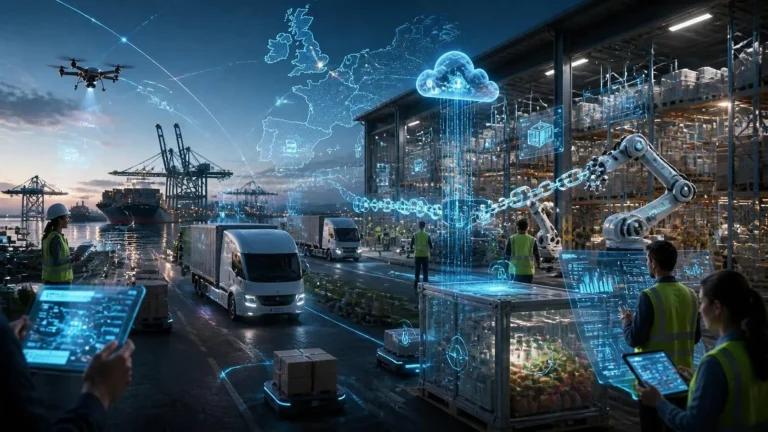
The course explains how goods move from suppliers to customers through transportation, warehousing, distribution centers, fulfillment networks, ports, terminals, and digital logistics platforms. Learners examine how information, physical goods, documents, payments, and operational decisions connect across the logistics chain.
Logistics includes the organization and management of flows related to purchasing, production, warehousing, distribution, disposal, reuse, and value-added services. It is an essential part of supply chain management and may be managed internally or outsourced to third-party logistics providers.
Learners will develop a practical understanding of transportation planning, shipment execution, warehouse activities, inventory visibility, order fulfillment, delivery performance, customer service, and logistics risks. The course also introduces the difference between logistics and supply chain management: logistics focuses primarily on the movement and storage of goods, while supply chain management covers the broader network of sourcing, planning, production, coordination, and relationships.
The course emphasizes the growing role of digital systems, including transportation management systems, warehouse management systems, enterprise resource planning systems, barcode and RFID technologies, GPS and tracking tools, electronic documents, dashboards, APIs, and digital freight platforms.
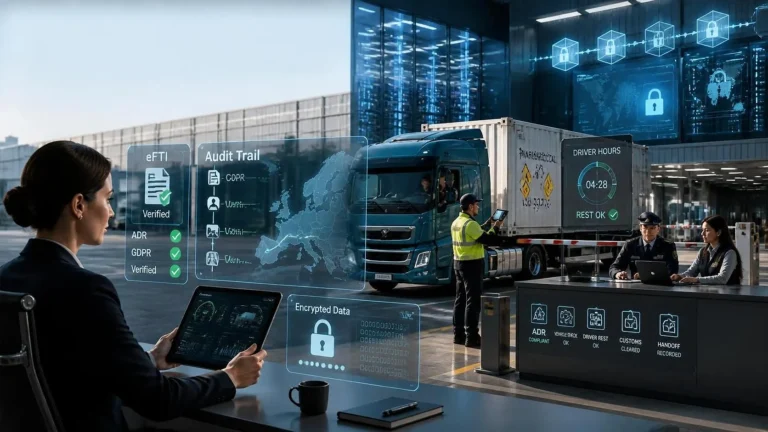
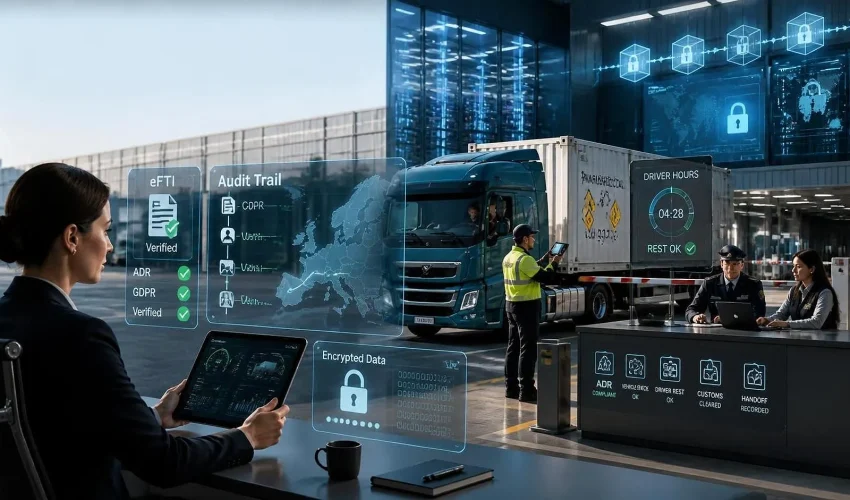
It also introduces electronic freight transport information, or eFTI. The European eFTI framework is designed to support the shift from paper-based freight documentation to standardized electronic data across road, rail, inland waterway, and air transport. The regulation is scheduled to apply in full on July 9, 2027, when EU Member State authorities must accept information shared electronically through certified eFTI platforms.
The course covers multimodal and intermodal logistics, including the use of road, rail, maritime transport, inland waterways, and air cargo. European transport policy promotes better integration and interoperability among transport modes to support more efficient, connected, and sustainable freight systems.
This course is designed for beginners and does not require previous logistics, transportation, warehouse, or technology experience. It is especially relevant to small and medium-sized enterprises, transport operators, freight forwarders, warehouse teams, e-commerce businesses, and professionals who need a practical introduction to digital logistics.
This is an educational foundation course. Completion does not constitute a professional license, transport authorization, safety certification, customs qualification, or regulatory certification.
Course metadata
| Field | Course information |
|---|---|
| Pillar | Logistics, Transportation & Distribution |
| Related pillars | Logistics, Supply Chain & Procurement; Information Technology, Data & Interoperability; Standards, Regulations & Digital Trade Compliance; Sustainability, Climate & Circular Economy |
| Category | Digital logistics |
| Subcategories | Transportation operations; warehousing; digital documentation; visibility; logistics systems; multimodal transport |
| Level | Foundation |
| Difficulty | Beginner |
| Estimated study time | 4–5 hours |
| Format | Text-first lessons, micro-video summaries, quizzes, scenarios, and practical worksheets |
| Language | American English |
| Market relevance | European Union, with examples from Portugal |
| Prerequisites | None |
| Assessment | Knowledge checks and final logistics workflow exercise |
| Certificate | EDTC Certificate of Completion – Foundation |
| Version | 1.0 |
| Regulatory content review | September 20, 2026 |
| Recommended review cycle | Every 6 months, or sooner when relevant rules change |
Learning outcomes
By the end of the course, learners should be able to:
- Define logistics and explain its role in supply chain management.
- Identify the main participants in a logistics network.
- Describe the basic flow of goods from supplier to customer.
- Distinguish between transportation, warehousing, distribution, fulfillment, and supply chain activities.
- Explain the basic functions of transportation management systems and warehouse management systems.
- Identify common logistics documents, records, and data flows.
- Explain the purpose of shipment visibility and track-and-trace systems.
- Recognize the difference between multimodal, intermodal, and single-mode transportation.
- Identify common logistics performance indicators.
- Recognize basic logistics costs, risks, delays, and service failures.
- Explain how digital tools can improve logistics coordination and decision-making.
- Describe the purpose of eFTI at an introductory level.
- Identify basic cybersecurity and data-quality risks in logistics operations.
- Explain how sustainability can influence routing, loading, warehousing, and mode selection.
- Create a basic digital logistics improvement plan.
Lessons
| Lesson | Title | Main focus |
|---|---|---|
| 1 | What Is Logistics? | Logistics definitions, objectives, activities, and its role in supply chain management |
| 2 | The Logistics Network | Shippers, consignees, carriers, freight forwarders, warehouses, ports, platforms, and service providers |
| 3 | How Goods Move Through the Supply Chain | Purchasing, order processing, transportation, storage, fulfillment, delivery, returns, and reverse logistics |
| 4 | Transportation Operations | Planning, routing, scheduling, loading, dispatching, delivery, and carrier coordination |
| 5 | Warehousing and Distribution Centers | Receiving, put-away, storage, picking, packing, cross-docking, staging, and shipping |
| 6 | Digital Logistics Systems | ERP, TMS, WMS, CRM, barcode, RFID, GPS, IoT, APIs, and system integration |
| 7 | Visibility, Data and Electronic Documents | Track and trace, status updates, data quality, electronic records, dashboards, and eFTI awareness |
| 8 | Multimodal Transport and Sustainable Logistics | Road, rail, maritime, inland waterway, air cargo, modal selection, efficiency, and emissions awareness |
| 9 | Logistics Performance, Risk and Customer Service | KPIs, service levels, delays, disruptions, claims, communication, and continuous improvement |
| 10 | Creating a Digital Logistics Improvement Plan | Process mapping, digital maturity, improvement priorities, implementation steps, and measurement |
Primary learner profile
The primary learner is an employee, manager, entrepreneur, or business owner who works with the movement, storage, fulfillment, or delivery of goods and needs a practical introduction to digital logistics processes and technologies.
The course is particularly useful for people working in organizations that still rely heavily on spreadsheets, email, phone calls, paper documents, or disconnected systems and want to understand how digital logistics can improve visibility, coordination, efficiency, and customer service.
Recommended next courses
After completing this course, learners can progress to:
- Digital Logistics Operations
- Warehouse Management Systems
- Transportation Operations
- Inventory Management
- Data Analytics for Logistics
- eFTI and Electronic Freight Information
- Cybersecurity in Supply Chains
- Sustainable Logistics
- Multimodal Transport and Port Logistics
- Supply Chain Fundamentals
Regulatory status box
| Item | Course status |
|---|---|
| Legal and policy areas referenced | eFTI, electronic freight information, digital transport documentation, multimodal transport, logistics data exchange |
| Jurisdiction | European Union, with Portugal-related context |
| Purpose | General awareness and operational orientation |
| Main regulatory reference | Regulation (EU) 2020/1056 on electronic freight transport information |
| Current implementation status | eFTI platform and implementation work is ongoing; full application is scheduled for July 9, 2027 |
| Last content review | September 20, 2026 |
| Next planned review | March 20, 2027 |
| Operational relevance | Helps learners understand the transition toward electronic freight information and digitally connected logistics processes |
| Content owner | EDTC Curriculum and Regulatory Content Owner |
| Important limitation | Course completion does not establish compliance, professional competence, transport authorization, or regulatory certification |
Certificate
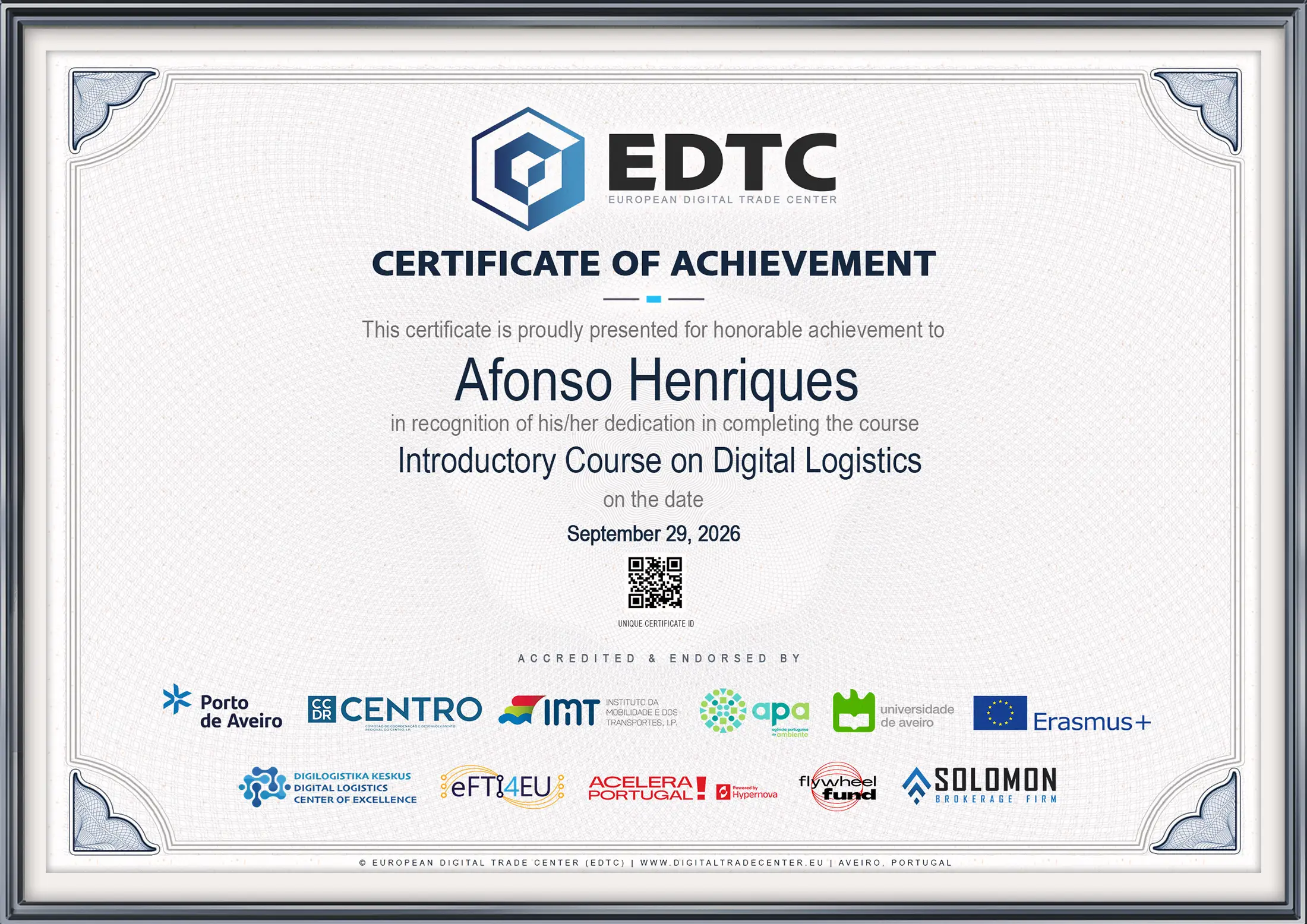
Earn a Certificate & Showcase Your Skills
Complete this course and earn a verified certificate to showcase your new skills. Share it on LinkedIn, add it to your resume, or download it for your records.

Instructor
European Digital Trade Center (EDTC)
2552 Students10 Courses
The European Digital Trade Center (EDTC) helps businesses and professionals participate in sustainable, technology-enabled international trade. Through its membership-based platform, EDTC offers practical training, assessments, and certifications in digital trade, logistics, transportation, trade finance, and compliance. Qualified members can access a digital brokerage marketplace to connect with relevant buyers and sellers, while organizations can receive support in implementing eLogistics, paperless trade, and digital transportation solutions.
Reviews