















EDTC Service

Ready for Digital Trade?

Frequently Asked Questions
The EDTC App









DEMO NOTICE: The content of this website is solely for demonstration purposes as EDTC raises funds. Dismiss

Foundation Courses
Applied Courses
Advanced Courses

Build the practical digital, operational, and analytical skills required to...

Develop the knowledge needed to support import, export, customs, documentation,...
Learn how to integrate sustainability, carbon management, circular economy principles,...

Develop the strategic and practical skills needed to guide digital...
Business, Entrepreneurship & Management
International Trade, Customs & Market Access
Logistics, Transportation & Distribution
Logistics, Supply Chain & Procurement
Trade Finance, Payments & Insurance
Information Technology, Data & Interoperability
Cybersecurity, Privacy & Digital Resilience
Sustainability, Climate & Circular Economy
Standards, Regulations & Digital Trade Compliance
Learn. Qualify. Trade.
The European Digital Trade Center (EDTC) prepares businesses & professionals for digital international trade through practical education, certification & qualified commercial connections.
info@digitaltradecenter.eu
+372 5332 9390
calendly.com/digitaltradecenter
Aveiro, PT | Tallinn, EE
© European Digital Trade Center (EDTC). All Rights Reserved.
Powered by QBRI.Digital
Learn. Qualify. Trade.
The European Digital Trade Center (EDTC) prepares businesses & professionals for digital international trade through practical education, certification & qualified commercial connections.
info@digitaltradecenter.eu
+372 5332 9390
calendly.com/digitaltradecenter
Aveiro, PT | Tallinn, EE
© European Digital Trade Center (EDTC). All Rights Reserved.
Powered by QBRI.Digital
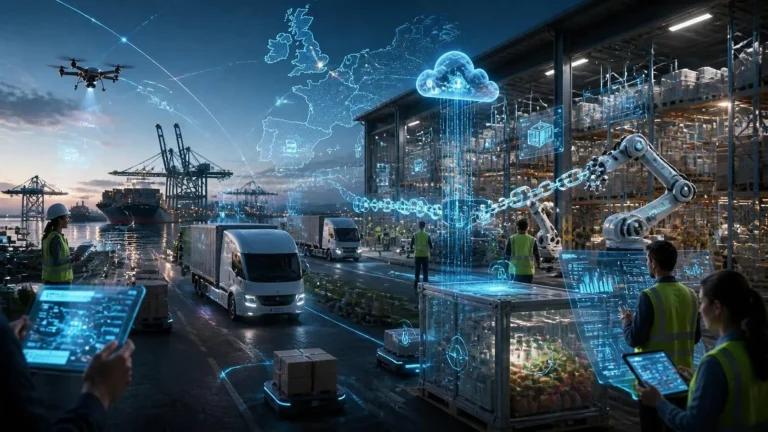
We guide companies in the formulation and implementation of digital transformation strategies in the field of logistics. Our approach focuses on optimizing logistics processes through the integration of digital technologies, thereby ensuring improvements in operational efficiency and greater market competitiveness.
Our Digital Transformation Strategy consulting enables organizations to modernize their logistics operations, transitioning from traditional methods to advanced digital solutions. This not only increases efficiency, but also enables companies to adapt to changing market demands.
By implementing innovative technologies, we facilitate faster and more accurate information flow, reducing costs and improving decision-making.
The consulting process begins with a thorough assessment of the organization’s needs and objectives, followed by an analysis of current logistics processes. Our team works in close collaboration with the client’s key departments to develop a strategic plan that details the necessary steps for digital transformation. This approach ensures that the proposed solutions align with existing infrastructure and focus on process optimization and staff training.
During the initial consulting phase, we conduct a complete diagnosis of current systems and processes, identifying areas for improvement and opportunities for digitalization. With a clear understanding of the requirements, we develop a strategic plan that outlines the steps to follow, timelines, and resource allocation. This plan acts as a roadmap for implementation, ensuring that all stakeholders are informed and engaged.
The adoption of a digital transformation strategy in logistics offers multiple benefits, such as:
The digitalization of logistics processes enables more agile and effective management, reducing the time and resources necessary to carry out operations.
By implementing digital technologies, companies can identify and eliminate inefficiencies, which translates into a significant reduction in operating costs.
Digital solutions provide companies with a real-time view of their logistics operations, facilitating the identification of bottlenecks and informed decision-making.
With a digital approach, companies can respond quickly to market fluctuations and customer demands, improving their adaptive capacity and resilience.
A digital transformation strategy in logistics involves the modernization of logistics processes through the integration of digital technologies. This includes the automation of operations, the digitalization of documents, the use of data analytics, and the implementation of management systems that improve the efficiency, visibility, and adaptability of the supply chain.
The key benefits include improved operational efficiency, cost optimization, greater visibility and control of operations, adaptability to market fluctuations, and better customer experience. These benefits help companies become more competitive and respond quickly to market demands.
The process begins with a comprehensive assessment of the organization’s needs and objectives. Then, a diagnosis of current logistics processes is conducted to identify areas for improvement. From there, a strategic plan is developed that details the steps to follow, timelines, and resource allocation, ensuring that all stakeholders are informed and committed.
The technologies that can be implemented include supply chain management systems (SCM), transportation management software (TMS), process automation solutions, data analytics tools, real-time tracking platforms, and Internet of Things (IoT) technologies to improve visibility and control of logistics operations.
During the implementation of the digital transformation strategy, personalized training is offered to staff to ensure they understand and master the new tools and processes. This includes training sessions, tutorials, and support resources, which facilitates a successful transition and maximizes the benefits of digitalization in logistics.
At the European Digital Trade Center (EDTC), we help businesses and governments implement sustainable digital trade, align with international standards, develop digital transportation corridors, and move toward paperless operations. Through customized strategies, practical training, technology, and consulting, EDTC supports organizations in modernizing processes and prepare for the future of connected commerce.
Visit out FAQ page to find answers about EDTC marketplace listings, memberships, product inquiries, brokerage fees, payments, compliance, and international trade opportunities.
Access EDTC’s digital trade and eLogistics courses on any device, connect with international trading opportunities, and explore our digital marketplace—all through one convenient platform designed for modern, connected commerce.
or Scan to download
Get the latest commodities, courses, and trading tips delivered to your inbox.
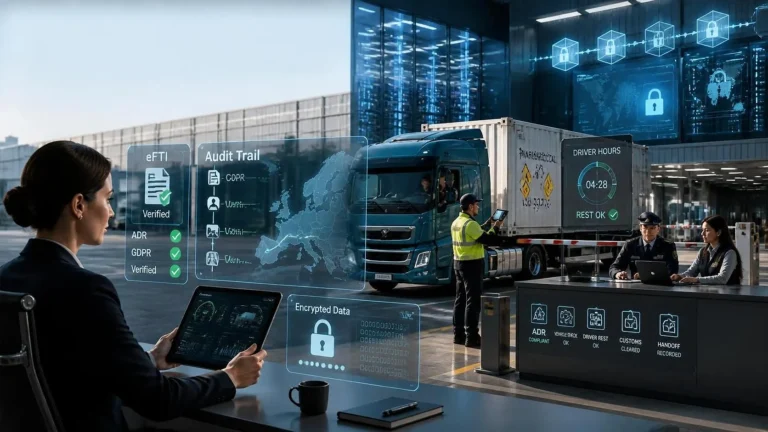
Demonstrative Platform Notice: This website and EDTC initiative are demonstrative platforms designed for fundraising purposes. SOLOMON Brokerage OÜ (Registry 16253938, Tallinn, Estonia) currently operates EDTC; a transition to a Portugal-based legal entity is planned upon funding approval. AI Transparency: This platform uses AI-assisted features for tutoring and personalized learning. You may be interacting with an AI system. All AI-generated course content is independently validated by qualified subject matter experts prior to publication. You may disable AI features without losing platform access. Chat logs are retained for 30–90 days and never used to train external AI models. eFTI & Data Processing: The EDTC marketplace is a private B2B/B2G trade facilitation platform—not a sovereign government eFTI Gateway. By submitting transaction data, you consent to transformation into eFTI-standard formats, qualified electronic signatures (eIDAS Regulation 910/2014), and secure retention for 5 years (consignments) and 7 years (audit logs). Educational Certificates: Course completion certifies workforce competency and does not constitute official national certifications or grant access to sovereign eFTI gateways. Full Details: See our Privacy Policy, Cookies Policy, and Terms & Conditions below.
© European Digital Trade Center (EDTC). All Rights Reserved.
Powered by QBRI.Digital