
















Cybersecurity, Risk and Business Resilience Specialist
Develop the practical capabilities needed to identify cyber, operational, supplier, technology, and continuity risks across trade and logistics environments. This pathway helps professionals strengthen security awareness, incident readiness, third-party risk management, business continuity, and organizational resilience.


The Cybersecurity, Risk and Business Resilience Specialist pathway responds to the growing dependence of businesses on connected systems, digital platforms, cloud services, electronic records, and third-party providers. It is designed for IT and operations professionals, logistics managers, business owners, risk teams, procurement staff, compliance personnel, and anyone responsible for protecting or maintaining critical business processes.
Learners begin with cybersecurity fundamentals, including phishing, malware, passwords, access management, social engineering, secure behavior, and security awareness. They then examine risks affecting fleet systems, warehouse management systems, ports, freight platforms, APIs, networks, cloud providers, suppliers, and other connected supply chain technologies.
The pathway also addresses incident detection, containment, reporting, recovery, backup systems, recovery testing, business continuity, crisis communication, operational resilience, supplier security, contractual controls, and risk reporting to management. Participants learn how to connect technical safeguards with everyday business processes and decision-making.
The final project is a Cybersecurity and Resilience Improvement Plan for an SME, logistics operation, marketplace, or supply chain function. The plan may include a risk register, critical-process assessment, third-party review approach, access-control recommendations, incident-response workflow, continuity priorities, recovery measures, and an implementation timetable.
The pathway builds awareness and implementation readiness. It does not by itself certify an organization against a cybersecurity law, standard, or regulatory obligation.
Pathway overview
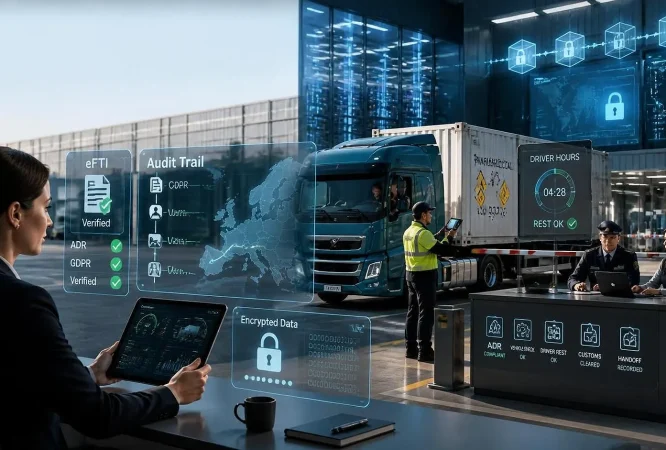
The Cybersecurity, Risk and Business Resilience Specialist pathway was created because trade and logistics now depend on interconnected digital systems, cloud services, APIs, electronic documents, suppliers, platforms, warehouse systems, fleet technologies, and port infrastructure. A disruption to one system or provider can affect an entire commercial network.
EDTC designed this pathway to help professionals recognize cyber and operational risks before they become serious business interruptions. It connects cybersecurity awareness with supply chain risk, third-party risk, incident response, business continuity, disaster recovery, and resilience planning.
The pathway is intended to help organizations build practical internal capabilities and communicate security and resilience priorities across technical, operational, procurement, and management teams.
Learners will develop the ability to:
- Recognize common phishing, malware, password, access, and social-engineering risks.
- Explain how cyber risks affect trade, transport, warehouses, ports, and digital platforms.
- Identify vulnerabilities in connected logistics and supply chain environments.
- Understand basic network, API, authentication, encryption, and monitoring concepts.
- Assess cybersecurity considerations when selecting suppliers and cloud providers.
- Identify appropriate questions for third-party security reviews.
- Understand the main stages of incident response.
- Prepare basic detection, containment, reporting, and recovery workflows.
- Identify critical business processes and recovery priorities.
- Understand the purpose of backups, recovery testing, and continuity exercises.
- Create a practical risk register.
- Communicate cybersecurity and resilience priorities to management.
- Prepare a cybersecurity and business-resilience improvement plan.
Who this pathway is aimed at
This pathway is suitable for:
- IT coordinators and technology managers.
- Logistics and warehouse managers.
- Supply chain-risk professionals.
- Procurement and vendor-management teams.
- Business owners and SME managers.
- Cybersecurity-awareness coordinators.
- Compliance and internal-control personnel.
- Business-continuity and crisis-management professionals.
- Digital marketplace operators.
- Operations professionals responsible for critical processes.
It is also suitable for non-technical managers who need to understand cybersecurity risk without becoming security engineers.
Entry requirements
Learners should have:
- Basic computer and workplace-technology skills.
- General familiarity with business operations.
- An interest in risk management, cybersecurity, or continuity planning.
- The ability to analyze processes, dependencies, and potential disruptions.
Advanced networking, penetration testing, or programming knowledge is not required.
What learners should expect
Learners should expect practical security and resilience scenarios rather than highly technical laboratory work. Activities may include recognizing threats, reviewing access controls, mapping system dependencies, assessing suppliers, prioritizing business processes, developing response steps, and preparing management reports.
The final project requires a Cybersecurity and Resilience Improvement Plan for an SME, logistics operation, marketplace, or supply chain function. It may include a risk register, critical-process assessment, third-party review approach, incident-response workflow, continuity priorities, recovery measures, communication responsibilities, and implementation milestones.
The pathway develops awareness and implementation readiness. It does not independently certify an organization against a cybersecurity law, framework, standard, or regulatory requirement.
Course Overview
- Course 1
Cybersecurity Awareness for Trade and Logistics (Foundation)
Learn how to recognize and reduce cybersecurity risks in trade and logistics. This beginner-friendly course covers phishing, passwords, malware, social engineering, data protection, incident reporting,...
- Course 2
Business Fundamentals for SMEs (Foundation)
Build a practical foundation in small-business management. This beginner-friendly course covers business models, customers, marketing, sales, operations, finance, cash flow, people, technology, risk, sustainability, and...
- Course 3
Digital Logistics Fundamentals (Foundation)
Learn how European digital logistics works from end to end. This beginner-friendly foundation course introduces freight transport modes, electronic documents, customs procedures, port single windows,...
- Course 4
Digital Skills for Trade and Logistics (Foundation)
Build practical digital skills for trade, logistics, and supply chain work. This beginner-friendly course introduces business systems, digital documents, data, cloud tools, communication, cybersecurity, electronic...
- Course 5
Introduction to European Digital Trade (Foundation)
Learn how European digital trade works from end to end. This beginner-friendly foundation course introduces cross-border trade, logistics, customs, digital documents, payments, data, cybersecurity, sustainability,...
- Course 6
Supply Chain Fundamentals (Foundation)
Understand how modern supply chains work from supplier to customer. This beginner-friendly course introduces procurement, planning, inventory, warehousing, transportation, distribution, technology, sustainability, risk, and supply...
- Course 7
Orientation to the EDTC Ecosystem (Foundation)
Orientation to the EDTC Ecosystem is the mandatory, free gateway course for all professionals, business managers, entrepreneurs, logistics operators, students, and public-sector stakeholders entering the...






Related Collection
 Learning Path
Trade Finance and Working Capital Specialist
Build the financial knowledge required to support international transactions, manage...
 Learning Path
SME Digital Transformation Manager
Develop the strategic and practical skills needed to guide digital...
 Learning Path
Digital Marketplace and Logistics Services Manager
Learn how to operate, promote, govern, and improve a digital...
 Learning Path
Digital Logistics Specialist
Build the practical digital, operational, and analytical skills required to...