Lesson 2: The 12 Curriculum Pillars & The 44-Course Catalog
Unit Information & Metadata
- Lesson ID: EDTC-0-F100_L02
- Estimated Study Duration: 90 Minutes (60 min core instructional study + 30 min practical exercise and assessment)
- Target EQF Level: EQF Level 3–4 (Vocational Awareness / Prerequisite Micro-Credential)
1. Lesson Opening & Business Relevance
1.1 Learning Objectives
Upon completion of this instructional unit, enterprise managers, logistics coordinators, compliance leads, and adult learners will be able to:
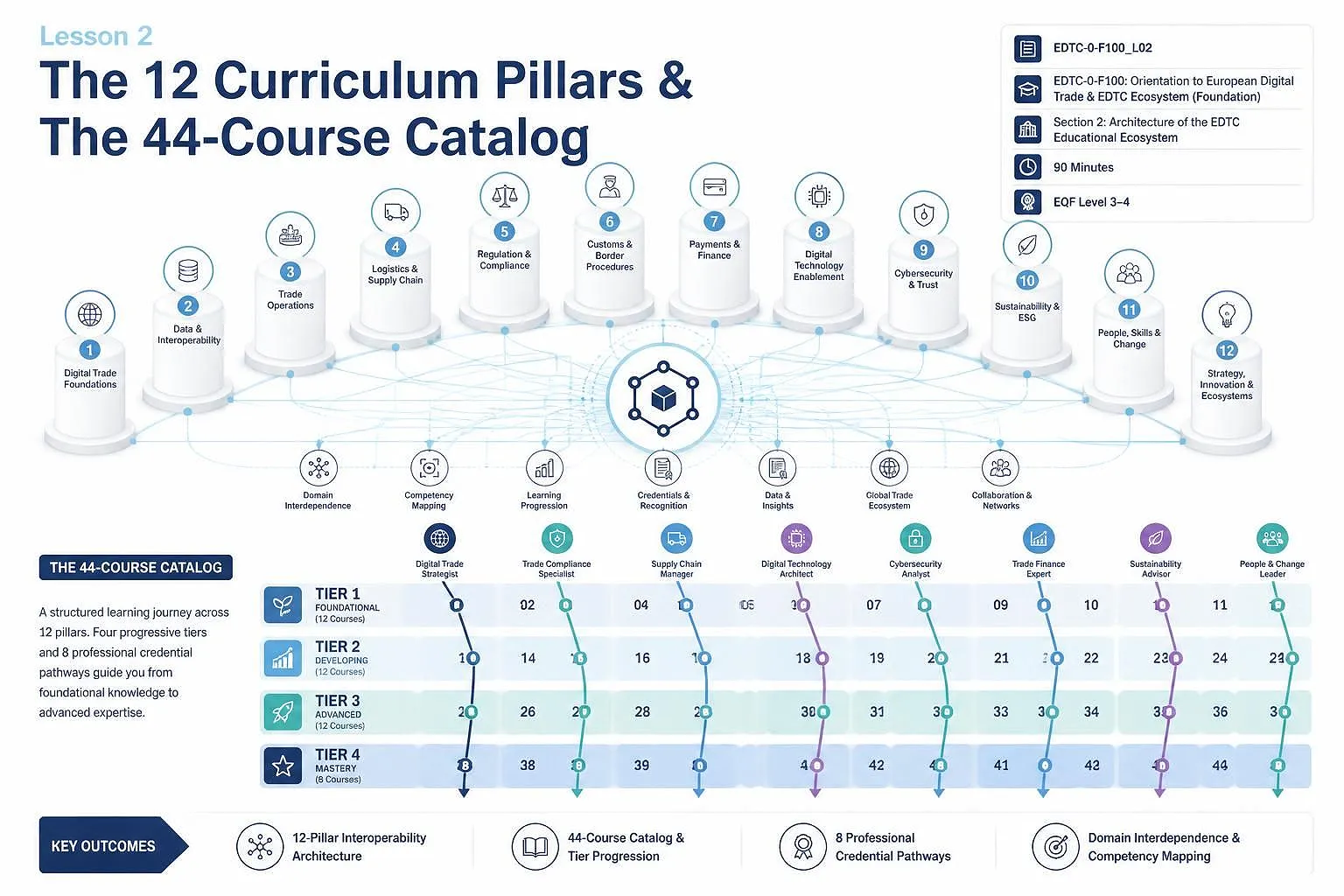
- Deconstruct the structural scope and operational rationale of the 12 Curriculum Pillars comprising the European Digital Trade Center (EDTC) educational matrix [1].
- Differentiate the learning depth, cognitive complexity, and target job roles across the 44-course catalog spanning Foundation, Applied, and Advanced qualification tiers [2].
- Map enterprise operational roles and personal career progression paths to the 8 specialized EDTC Professional Credential Pathways [3].
- Apply the principle of domain interdependence to analyze how cross-pillar competency integration resolves multi-faceted digital supply chain and customs compliance challenges [4].
1.2 Business Relevance
Modern cross-border digital trade in the European Union no longer operates in isolated silos. An international commercial transaction executed across European borders simultaneously engages customs law, electronic contract validity, transport logistics data exchange, cybersecurity protocols, sustainability reporting, and digital payments [5]. When an exporting enterprise attempts to address digital supply chain bottlenecks by training personnel in a single narrow function—such as customs entry filing without understanding electronic freight transport information (eFTI) data schemas or VAT One Stop Shop (OSS) rules—it inevitably encounters friction, operational delays, and regulatory compliance failures [6].
The EDTC 12-Pillar Curriculum Architecture provides a holistic, integrated competency framework designed to eliminate operational knowledge silos [1]. By organizing 44 targeted micro-credential courses across 12 interlocked domain pillars, EDTC enables small and medium-sized enterprises (SMEs) and corporate trade logistics teams to build cross-functional digital capabilities [2]. Navigating this catalog allows enterprise leadership to strategically upskill personnel, close organizational digital readiness gaps, and ensure full compliance with evolving European Union mandates [7].
1.3 Key Concepts Preview
- The 12 Curriculum Pillars: The foundational domain structure organizing all EDTC educational offerings from Business Strategy to Global Negotiation [1].
- The 44-Course Matrix: The complete catalog of targeted, outcomes-based vocational courses distributed across 12 pillars [2].
- Three Qualification Tiers: Foundation (EQF 3–4), Applied (EQF 5), and Advanced (EQF 5–6) micro-credential learning levels [8].
- Domain Interdependence: The systematic integration of knowledge across multiple pillars required to solve complex real-world trade problems [4].
- 8 Professional Credential Pathways: Curated stackable learning sequences combining Foundation, Applied, Advanced, and Capstone components to confer professional trade credentials [3].
2. Core Instructional Content
2.1 Deconstructing the 12 EDTC Curriculum Pillars
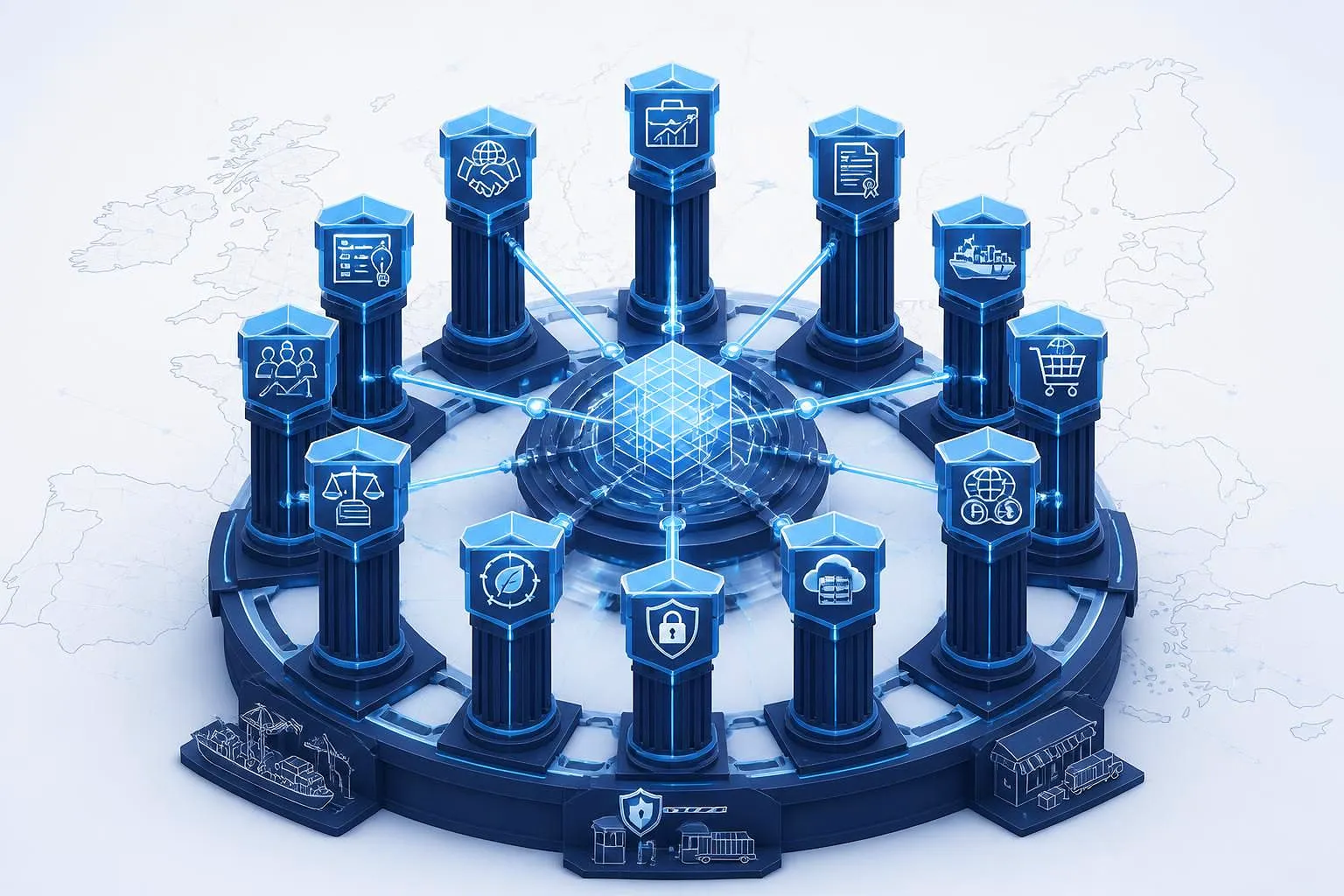
The European Digital Trade Center curriculum is anchored in 12 specialized domain pillars that collectively encompass the full operational, legal, technical, and strategic lifecycle of European cross-border commerce [1]. Each pillar represents a critical functional domain required for modern enterprise internationalization and paperless trade execution.
Pillar 1: Business & Entrepreneurship
Pillar 1 establishes the strategic, financial, and organizational foundations for cross-border enterprise growth [9]. It addresses how European SMEs transition from domestic business models to international digital trade operations. Key topics include digital business model design, international market entry strategies, organizational readiness evaluation, and corporate venture scaling under European Union economic development programs [7].
Pillar 2: International Trade & Customs
Pillar 2 forms the regulatory and operational core of customs clearance, trade documentation, and tariff compliance within the EU Customs Union [10]. It provides exhaustive training on the Union Customs Code (UCC), 10-digit TARIC nomenclature, the 6 General Interpretive Rules (GIRs) for tariff classification, preferential rules of origin, Binding Tariff Information (BTI) application dossiers, and electronic pre-lodgment procedures via national customs portals such as the Portuguese Tax and Customs Authority ACE Portal [11].
Pillar 3: Logistics & Supply Chain Management
Pillar 3 addresses the physical, digital, and multimodal movement of containerized, bulk, and express freight across European logistics corridors [12]. Instructional content covers freight forwarding execution, warehouse management systems (WMS), maritime port community systems—specifically port single-window platforms such as the Janela Única Logística (JUL) at the Port of Sines, Port of Leixões, and Port of Aveiro—multimodal transport documentation (e-CMR, FIATA eFBL, e-AWB), and cold-chain logistics compliance [13].
Pillar 4: E-Commerce & Digital Marketing
Pillar 4 focuses on cross-border business-to-consumer (B2C) and business-to-business (B2B) digital sales channels, global customer acquisition, and international brand positioning [14]. Key areas include cross-border e-commerce platform architecture, multi-lingual digital marketing strategies, European consumer protection law, geo-blocking regulation compliance, and international customer relationship management (CRM) integration [9].
Pillar 5: Trade Finance & Payments
Pillar 5 covers the financial instruments, risk mitigation tools, and digital payment mechanisms supporting international commercial transactions [15]. Learners examine documentary credits (Letters of Credit under UCP 600), supply chain receivables financing, international factoring, credit insurance, foreign exchange (FX) hedging strategies, cross-border e-invoicing standards, and automated B2B payment clearing systems [16].
Pillar 6: Information Technology & Data Management
Pillar 6 delivers the technical capabilities required to architect, integrate, and manage enterprise digital trade infrastructure [17]. Content covers B2B Electronic Data Interchange (EDIFACT and XML schemas), enterprise resource planning (ERP) system integration, cloud architecture, master data management, API middleware engineering, and distributed ledger systems for supply chain traceability [18].
Pillar 7: Cybersecurity & Operational Resilience
Pillar 7 safeguards enterprise trade data, IT infrastructure, and supply chain networks against cyber threats, ransomware, and operational disruptions [19]. Grounded in the NIS2 Directive (Directive (EU) 2022/2555) and the General Data Protection Regulation (GDPR – Regulation (EU) 2016/679), this pillar covers information security management systems (ISO 27001), supply chain entity risk audits, incident response protocols, and eIDAS 2.0 electronic identity and trust service verification [20].
Pillar 8: Sustainability & Circular Economy
Pillar 8 aligns cross-border trade operations with the European Green Deal, climate neutrality targets, and circular economy principles [21]. Instructional focus includes Scope 1, 2, and 3 supply chain carbon footprint calculation, Corporate Sustainability Reporting Directive (CSRD – Directive (EU) 2022/2464) compliance, Carbon Border Adjustment Mechanism (CBAM – Regulation (EU) 2023/956) quarterly reporting, and sustainable packaging regulations [22].
Pillar 9: Legal, Compliance & Governance
Pillar 9 provides authoritative legal training on international commercial law, regulatory compliance frameworks, and corporate governance [23]. Content includes cross-border sales contract drafting under CISG, EU dual-use export control regulations (Regulation (EU) 2021/821), international sanctions map screening, choice of law and jurisdiction clauses, and corporate compliance program design [24].
Pillar 10: Human Capital & Digital Skills
Pillar 10 focuses on workforce upskilling, organizational digital maturity, and talent management [25]. Mapped directly to the European Digital Competence Framework (DigComp 3.0), this pillar equips enterprise leads with tools to conduct organizational skills gap analyses, design continuous vocational training programs, and lead digital transformation initiatives across multi-disciplinary teams [26].
Pillar 11: Project Management & Innovation
Pillar 11 delivers project execution methodologies and innovation management frameworks required to lead digital transition initiatives [27]. Instructional content covers Agile and Waterfall project management, European Union grant application structuring (Digital Europe Programme, Horizon Europe), Technology Readiness Level (TRL 1–9) commercialization, and earned value management (EVM) [28].
Pillar 12: Cross-Border Negotiation & Global Market Expansion
Pillar 12 develops advanced strategic negotiation skills, cross-cultural communication techniques, and international distribution channel management [29]. Learners master international commercial distribution agreements, joint venture structuring, foreign direct investment (FDI) regulatory screening, and international trade dispute arbitration under the ICC International Court of Arbitration rules [30].
2.2 The 44-Course Catalog Structure & Qualification Tiers
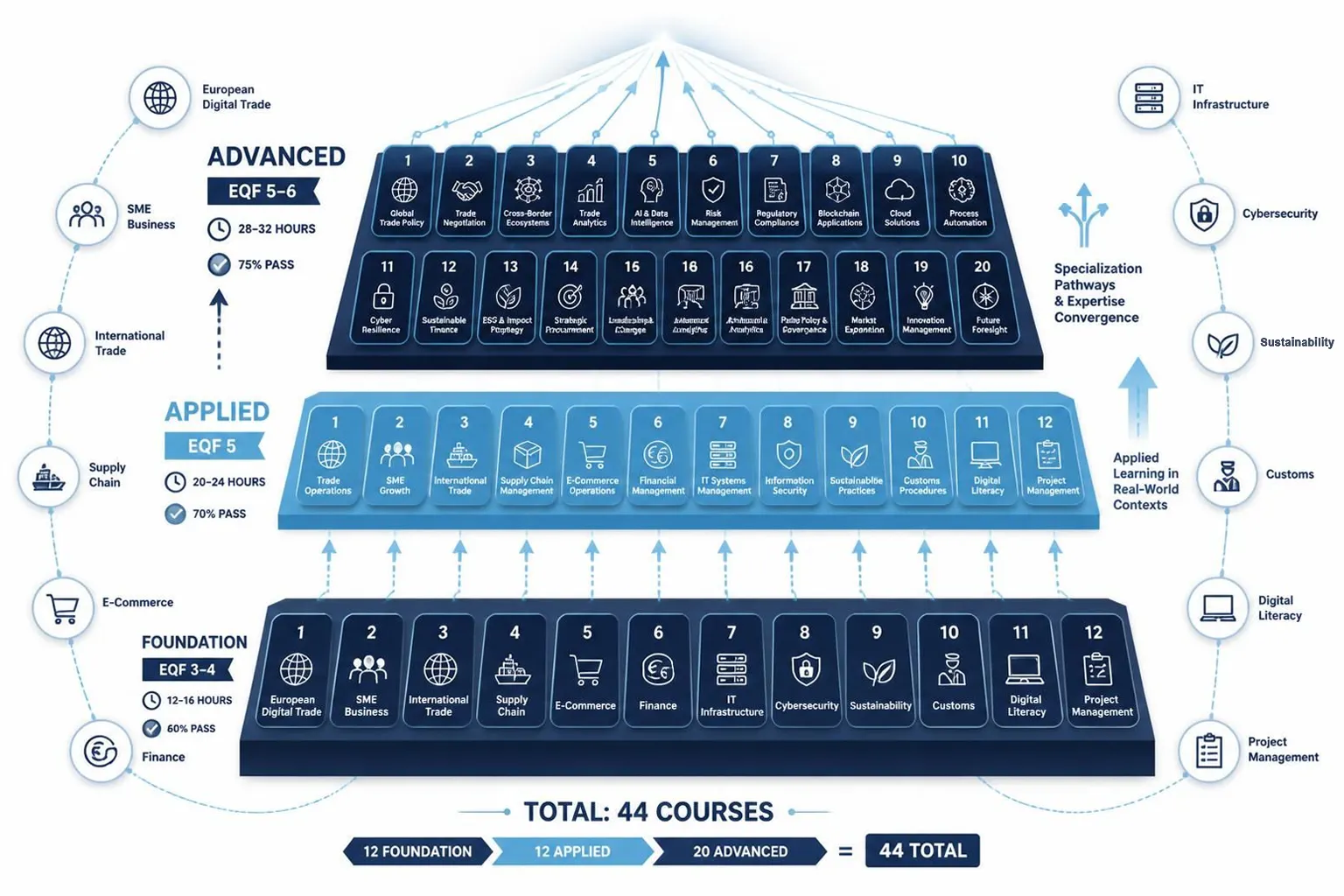
The 44 courses comprising the EDTC catalog are systematically distributed across the 12 Pillars and organized into three progressive qualification tiers [2]. This tiered structure ensures that adult learners enter at an appropriate baseline and progress logically toward advanced specialized mastery.
EDTC Qualification Tier Architecture
| Tier | Foundation Tier (EQF Levels 3–4) | Applied Tier (EQF Level 5) | Advanced Tier (EQF Levels 5–6) |
|---|---|---|---|
| Number of Courses | 12 courses (1 per Pillar) | 12 courses (1 per Pillar) | 20 courses |
| Primary Focus | Core Concepts, Terminology, Regulatory Awareness & Orientation | Operational Workflows, Portal Data Entry, Forms & Execution | Legal Audits, Custom RVC Models & BTI Dossiers |
| Duration | 12–16 hours | 20–24 hours | 28–32 hours |
| Pass Threshold | 60% | 70% | 75% |
Foundation Tier Courses (EQF Levels 3–4)
The Foundation Tier comprises 12 introductory courses—exactly one course per pillar [2]. Foundation courses establish core domain literacy, essential regulatory awareness, and standardized terminology. They are designed for enterprise owners, junior staff, and career changers requiring a solid functional overview before engaging in operational software execution.
- Duration: 12–16 study hours per course (8 lessons per course).
- Assessment & Pass Threshold: 8 formative lesson quizzes + 40-question final exam; pass threshold is 60%.
- Foundation Catalog (12 Courses):
EDTC-1-F101: Introduction to European Digital TradeEDTC-1-F102: Business Fundamentals for SMEsEDTC-2-F201: International Trade FundamentalsEDTC-3-F301: Supply Chain & Logistics FundamentalsEDTC-4-F401: Cross-Border E-Commerce EssentialsEDTC-5-F501: Trade Finance & Payment BasicsEDTC-6-F601: IT Infrastructure & Data LiteracyEDTC-7-F701: Cybersecurity Hygiene for Digital TradeEDTC-8-F801: Sustainable Trade & ESG PrinciplesEDTC-9-F901: Introduction to Customs & Legal ComplianceEDTC-10-F1001: Digital Literacy & Workplace UpskillingEDTC-11-F1101: Project Management Fundamentals
Applied Tier Courses (EQF Level 5)
The Applied Tier comprises 12 operational courses—one course per pillar [2]. Applied courses train learners to execute real-world business workflows, complete official administrative forms, input data into national trade portals (such as the ACE Portal and Sines JUL platform), and apply mathematical trade models.
- Duration: 20–24 study hours per course (12–15 lessons per course).
- Assessment & Pass Threshold: 12–15 formative lesson quizzes + 40-question final exam; pass threshold is 70%.
- Applied Catalog (12 Courses):
EDTC-1-AP101: Digital Business Operations & StrategyEDTC-2-AP201: Trade DocumentationEDTC-3-AP301: Freight Forwarding & Warehouse OperationsEDTC-4-AP401: Digital Marketing & Global Customer AcquisitionEDTC-5-AP501: Working Capital & Letters of CreditEDTC-6-AP601: Enterprise Data Management & System IntegrationEDTC-7-AP701: Information Security Management & GDPR ComplianceEDTC-8-AP801: Carbon Accounting & Corporate Sustainability ReportingEDTC-9-AP901: International Commercial Contracts & Regulatory EnforcementEDTC-10-AP1001: Workforce Upskilling & Talent ManagementEDTC-11-AP1101: Agile Management & Innovation GrantsEDTC-12-AP1201: Cross-Border Negotiation & Distribution Agreements
Advanced Tier Courses (EQF Levels 5–6)
The Advanced Tier comprises 20 specialized courses distributed across high-complexity pillars (such as Customs, Logistics, IT, Cybersecurity, Sustainability, and Legal Compliance) [2]. Advanced courses train senior specialists, customs declarants, compliance directors, and IT architects to handle complex legal audits, construct Binding Tariff Information (BTI) application dossiers, execute complex Regional Value Content (RVC) calculations, build custom API middleware, and manage customs litigation defense.
- Duration: 28–32 study hours per course (18–22 lessons per course).
- Assessment & Pass Threshold: 18–22 formative lesson quizzes + 40-question final exam; pass threshold is 75%.
- Advanced Catalog Highlights (20 Courses):
EDTC-2-AD201: EU Customs, Origin, and Tariff ClassificationEDTC-2-AD202: Advanced Customs Compliance & AEO CertificationEDTC-3-AD301: Multimodal Transport and Port LogisticsEDTC-3-AD302: Supply Chain Risk Management & Network OptimizationEDTC-6-AD601: Enterprise Architecture & Distributed Ledger SystemsEDTC-7-AD701: NIS2 Compliance & Critical Supply Chain ResilienceEDTC-8-AD801: Carbon Border Adjustment Mechanism (CBAM) ComplianceEDTC-9-AD901: Sanctions Screening, Export Controls & Dual-Use GoodsEDTC-12-AD1201: Global Strategic Alliances & Joint VenturesEDTC-12-AD1202: International Trade Dispute Arbitration & Mediation
2.3 The 8 EDTC Professional Credential Pathways
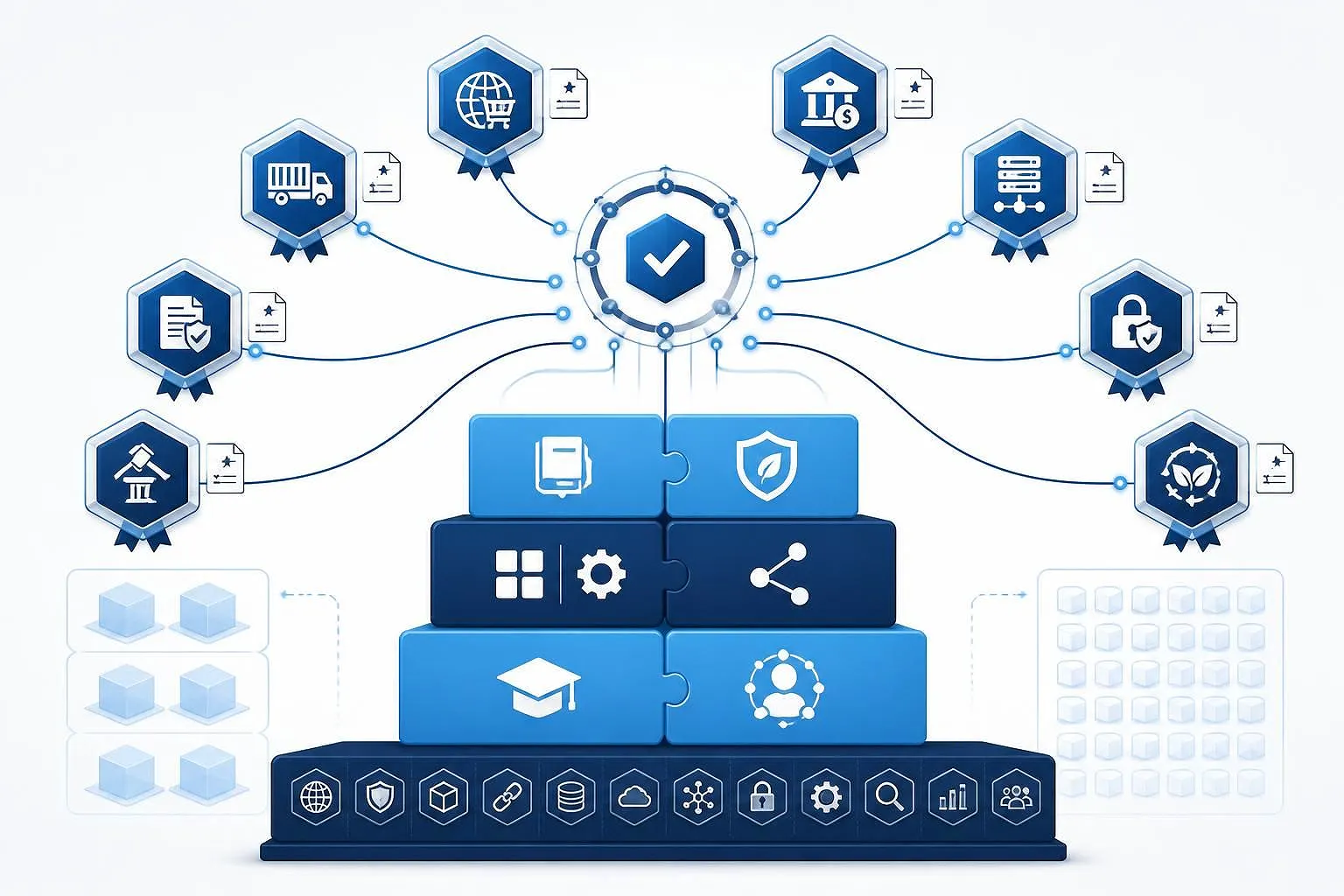
To provide structured career development and clear enterprise upskilling trajectories, EDTC bundles courses into 8 specialized Professional Credential Pathways [3]. Each pathway combines selected Foundation, Applied, and Advanced courses with a mandatory capstone project, conferring a recognized vocational digital credential upon completion.
The 8 EDTC Professional Credential Pathways
| Pathway # | Credential Pathway |
|---|---|
| 1 | Digital Trade & Customs Compliance Specialist |
| 2 | Smart Logistics & Multimodal Supply Chain Professional |
| 3 | Cross-Border E-Commerce & Global Market Director |
| 4 | International Trade Finance & Risk Management Specialist |
| 5 | Enterprise Trade IT & Data Systems Architect |
| 6 | Cyber Resilience & Supply Chain Security Manager |
| 7 | Green Trade & Sustainable Supply Chain Lead |
| 8 | Global Trade Law, Sanctions & Governance Director |
Pathway Structure & Graduation Requirements
Every Professional Credential Pathway requires completing a structured stackable sequence:
- Core Foundation Prerequisite (
EDTC-0-F100): Orientation to European Digital Trade & EDTC Ecosystem (Mandatory free prerequisite). - 2 Foundation Tier Courses: Specific domain fundamentals.
- 2 Applied Tier Courses: Operational software and document execution.
- 2 Advanced Tier Courses: Specialized legal, technical, or audit mastery.
- Applied Capstone Project: A 1,200-word comprehensive enterprise case study evaluated against a 100-point rubric (Pass threshold: 75%).
Upon completing all 7 components, the learner is issued a verifiable digital badge (conforming to W3C Verifiable Credentials and eIDAS 2.0 standards) and an official Europass Mobility Supplement [31].
2.4 Domain Interdependence in Real-World Digital Trade Execution
The defining innovation of the EDTC curriculum is its practical application of domain interdependence [4]. In global trade execution, a single operational breakdown routinely spans multiple pillars. The EDTC curriculum structure trains learners to recognize these cross-pillar connections and execute unified solutions.
2.4.1 Case Illustration: The Anatomy of a Cross-Pillar Export Failure
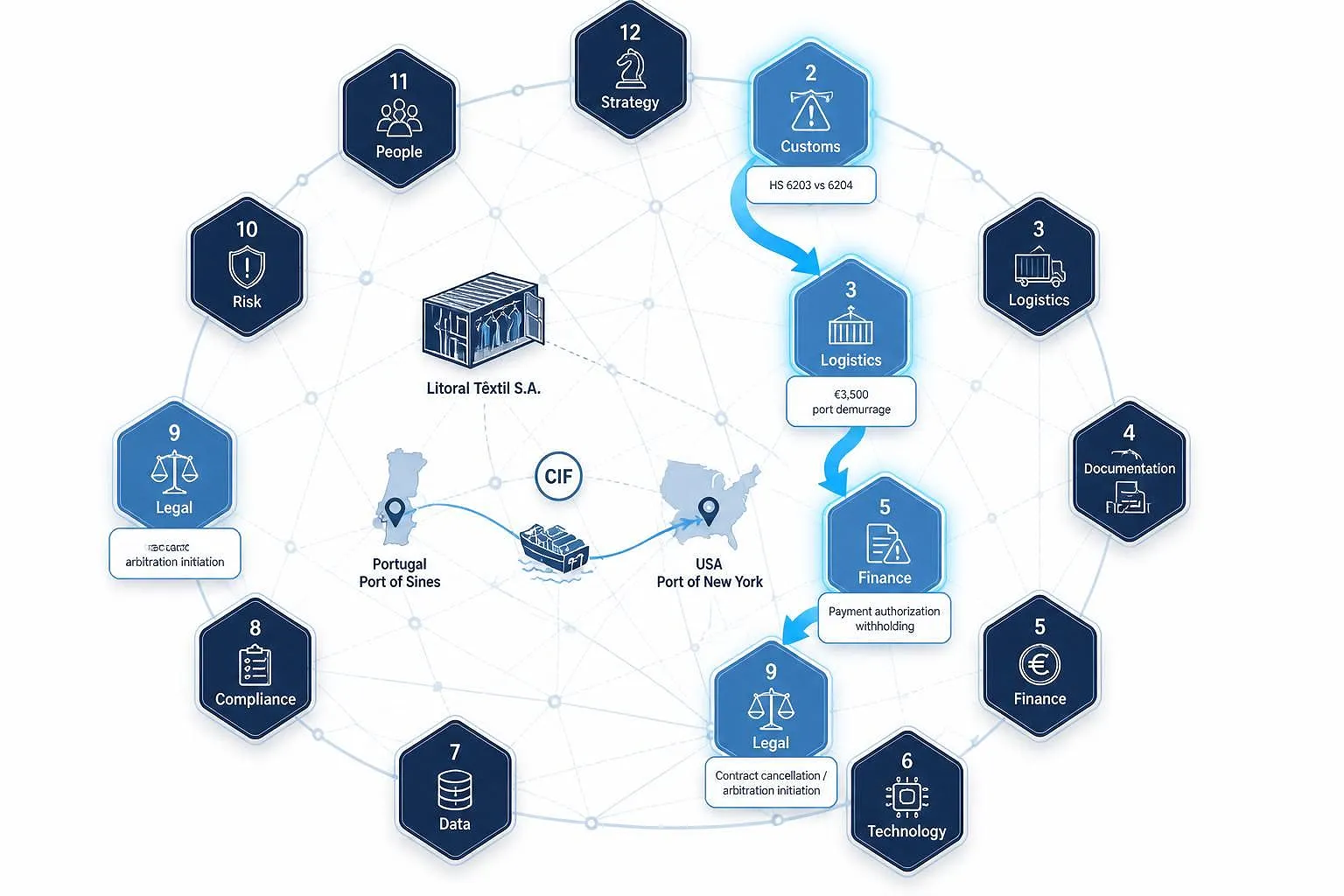
Consider a Portuguese apparel exporter (Litoral Têxtil S.A.) shipping containerized garments from the Port of Sines to a retail distributor in New York under CIF (Cost, Insurance, and Freight) Incoterms 2020 rules:
Cross-Pillar Interdependence Cascade
| Sequence | Pillar | Domain | Issue / Consequence |
|---|---|---|---|
| 1 | Pillar 2 | Customs | Incorrect HS Code declared on ACE Portal |
| ↓ | |||
| 2 | Pillar 3 | Logistics | Container detained at Sines Terminal (JUL) |
| ↓ | |||
| 3 | Pillar 5 | Finance | Bank rejects Letter of Credit under UCP 600 |
| ↓ | |||
| 4 | Pillar 9 | Legal | Buyer files breach of contract arbitration |
- Customs Breakdown (Pillar 2): The export clerk misclassifies cotton-blended jackets under HS Code 6203 instead of 6204, causing an automated red-lane physical inspection hold on the Portuguese Tax and Customs Authority ACE Portal [11].
- Logistics Delay (Pillar 3): Cargo detention at the Port of Sines container terminal misses the vessel loading window, generating €3,500 in maritime port demurrage charges recorded on the Janela Única Logística (JUL) platform [13].
- Trade Finance Discrepancy (Pillar 5): Because the bill of lading date falls outside the latest shipment date specified in the buyer’s Letter of Credit, the confirming bank issues a notice of document discrepancy under UCP 600 rules, withholding payment authorization [16].
- Legal & Commercial Liability (Pillar 9): The overseas buyer cancels the sales contract and initiates formal arbitration under ICC rules, citing non-delivery and failure to transfer risk properly under CIF Incoterms 2020 [30].
An employee trained solely in basic logistics (Pillar 3) cannot resolve this breakdown. Resolving it requires an integrated understanding of customs entry fields (Pillar 2), port community system slot booking (Pillar 3), letter of credit discrepancy waivers (Pillar 5), and commercial sales contract clauses (Pillar 9) [4]. EDTC courses teach learners to navigate these cross-pillar dependencies seamlessly.
3. Practical Workflow: Enterprise Curriculum & Pathway Selection Matrix
To help enterprise leadership and individual adult learners navigate the 44-course catalog efficiently, EDTC provides a standardized Enterprise Curriculum & Pathway Selection Workflow.
3.1 Operational Role Responsibility Matrix
- Business Activity: Organizational Digital Trade Skills Audit & Pathway Mapping.
- Responsible Roles: Enterprise Managing Director / Founder; Chief Operations Officer (COO); Human Resources / Upskilling Lead; Export Compliance Officer.
| Step | Action Item | Required Input / Tool | Operational Decision Point | Escalation Trigger |
|---|---|---|---|---|
| 1 | Conduct Organizational Digital Maturity Audit | SME Digital Readiness Canvas (EDTC-1-F101_Tool_03) |
Is the enterprise operating at Stage 1 (Legacy Paper) or Stage 2 (Fragmented Digital)? | If >40% of trade files rely on paper forms, mandate Foundation Tier enrollment. |
| 2 | Identify Target Professional Roles | EDTC Pathway Selection Matrix (EDTC-1-F101_Tool_02) |
Which functional departments experience highest error rates (Customs, Logistics, Finance)? | If customs entries experience >2% detention rate, assign Pathway 1 (Customs Compliance). |
| 3 | Enrol Team in Mandatory Prerequisite | EDTC LMS Registration Portal (EDTC-0-F100) |
Have all enrolled personnel completed EDTC-0-F100 with a passing score ≥60%? |
If learner fails EDTC-0-F100 quiz, mandate review of Ecosystem Architecture units. |
| 4 | Deploy Stackable Tier Progression | EDTC 44-Course Catalog Directory | Are learners progressing from Foundation (EQF 3–4) to Applied (EQF 5) courses? | If Applied quiz score is <70%, issue diagnostic remediation feedback before Advanced tier. |
| 5 | Execute Capstone Project & Credentialing | Enterprise Case Project Brief | Does the Capstone Project solve a real internal supply chain or customs bottleneck? | If Capstone score is <75%, require resubmission with SME instructor guidance. |
4. Realistic Enterprise Scenario
4.1 Scenario Narrative
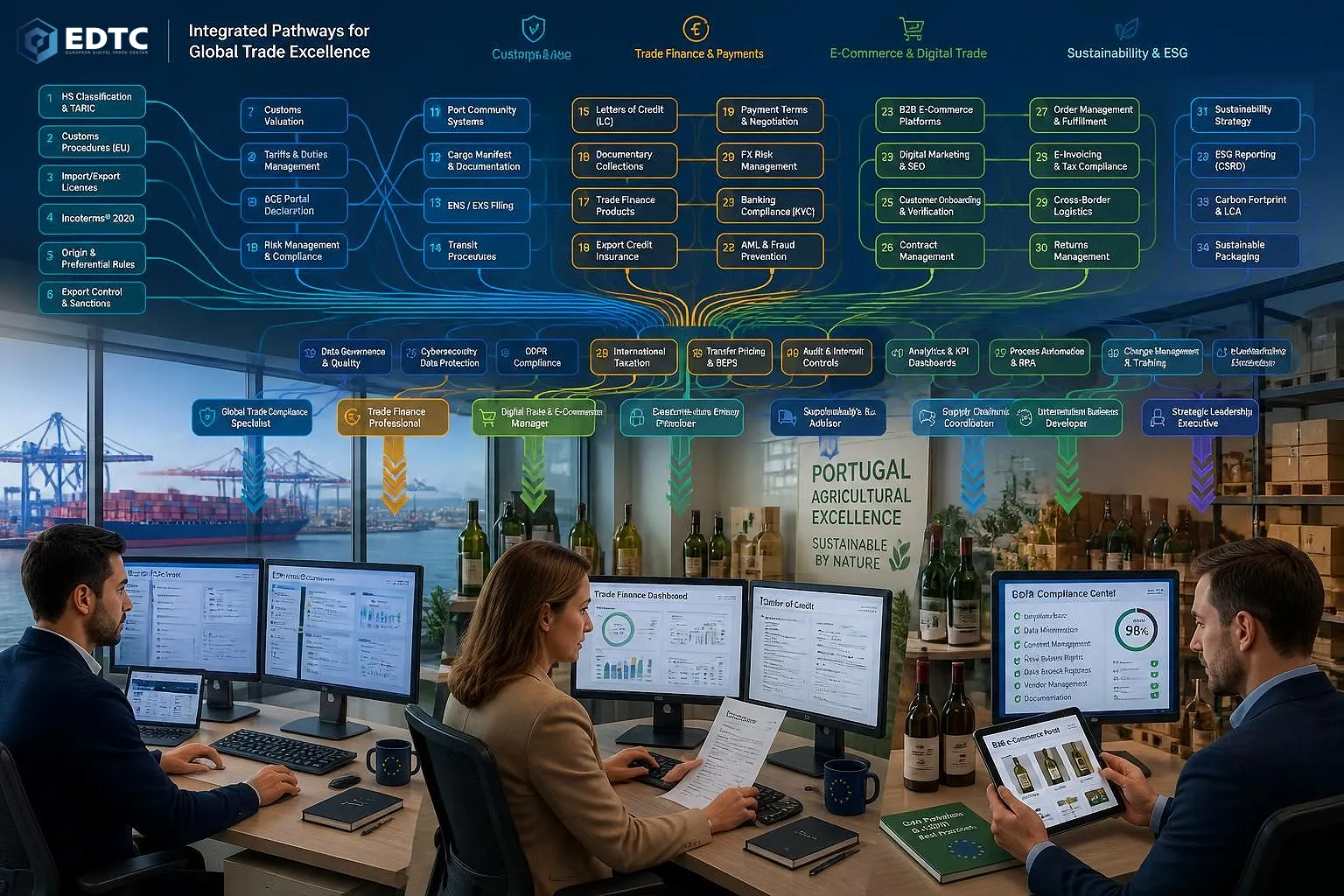
Agro-Alentejo S.A., a medium-sized agricultural exporter based in Évora, Portugal, exports premium olive oil, wine, and canned tomatoes to distributors in North America, the United Kingdom, and Northern Europe. Currently, the enterprise employs 28 personnel across administration, sales, logistics, and warehousing.
During an annual operational audit, the Managing Director discovers several critical bottlenecks:
- Export customs entry filings prepared by the shipping clerk are frequently flagged for missing TARIC 10-digit subheading details on the Portuguese Tax and Customs Authority ACE Portal, delaying container dispatches from the Port of Sines terminal by 48–72 hours [11], [13].
- The accounting team prepares paper commercial invoices and packing lists manually, leading to frequent weight and currency notation errors that cause bank payment rejections under Letter of Credit agreements [16].
- The sales manager wants to launch a cross-border B2B e-commerce platform but lacks knowledge of EU VAT One Stop Shop (OSS) registration rules and GDPR customer consent requirements [14], [20].
The Managing Director wants to structure an internal upskilling program using the EDTC catalog to resolve these multi-departmental bottlenecks without disrupting daily operations.
4.2 4-Part Evaluation Key & Analysis
Part 1: Primary Operational Diagnosis
Agro-Alentejo S.A. suffers from fragmented operational domain capability across three distinct functional areas: Customs Compliance (Pillar 2), Trade Finance & Invoicing (Pillar 5), and Cross-Border E-Commerce & Data Privacy (Pillars 4 and 7) [2], [4]. The company’s reliance on manual paper-based processes and isolated departmental training creates severe cross-pillar failure cascades, leading to port demurrage charges and payment delays [6].
Part 2: Recommended EDTC Pathway Mapping & Course Enrollment
To address these specific bottlenecks systematically, the Managing Director should implement a multi-track upskilling strategy:
AGRO-ALENTEJO S.A. EDTC UPSKILLING ROADMAP
| Step | Role / Department | Pathway | Courses |
|---|---|---|---|
| Step 1 | All Personnel | Orientation Prerequisite | EDTC-0-F100 |
| Step 2 | Export Shipping Clerk | Pathway 1: Customs & Logistics | EDTC-2-F201 → EDTC-2-AP201 → EDTC-2-AD201 |
| Step 2 | Accounting Team | Pathway 4: Trade Finance & Payments | EDTC-5-F501 → EDTC-5-AP501 |
| Step 2 | Sales Manager | Pathway 3: E-Commerce & Digital Marketing | EDTC-4-F401 → EDTC-4-AP401 → EDTC-7-AP701 (GDPR) |
- Universal Prerequisite (All Staff): Enrol all 28 personnel in
EDTC-0-F100(Orientation to European Digital Trade & EDTC Ecosystem) to establish shared digital trade literacy, terminology, and platform navigation skills [1]. - Track A — Customs & Logistics (Shipping Clerk): Assign Pathway 1 (Digital Trade & Customs Compliance Specialist). The clerk will complete
EDTC-2-F201(Trade Fundamentals),EDTC-2-AP201(Trade Documentation & ACE Portal Data Entry), andEDTC-2-AD201(EU Customs, Origin & Tariff Classification) [10], [11]. - Track B — Trade Finance & Payments (Accounting Lead): Assign Pathway 4 (Trade Finance & Risk Management). The accountant will complete
EDTC-5-F501(Payment Basics) andEDTC-5-AP501(Working Capital & Letters of Credit) to master digital invoice schemas and UCP 600 compliance [15], [16]. - Track C — Digital Sales & Compliance (Sales Manager): Assign Pathway 3 (Cross-Border E-Commerce). The manager will complete
EDTC-4-F401(E-Commerce Essentials),EDTC-4-AP401(Global Customer Acquisition), andEDTC-7-AP701(GDPR & Data Protection) [14], [20].
Part 3: Alternative Acceptable Approach
If budget or time constraints prevent simultaneous multi-departmental enrollment, Agro-Alentejo S.A. can adopt a Phased Modular Sequence:
- Phase 1 (Immediate Risk Mitigation): Enrol the Shipping Clerk immediately in
EDTC-2-AP201(Trade Documentation) after completingEDTC-0-F100to resolve active port detention holds at Sines within 30 days [11], [13]. - Phase 2 (Cash Flow Stabilization): Enrol the Accounting Lead in
EDTC-5-AP501in Quarter 2 to eliminate Letter of Credit discrepancies [16]. - Phase 3 (Growth Scaling): Enrol the Sales Manager in
EDTC-4-AP401in Quarter 3 to launch the B2B e-commerce platform [14].
Part 4: Common Learner & Management Misconceptions
- Misconception A: Assuming that hiring an external software vendor will automatically solve customs filing errors without upskilling internal staff. In reality, software tools require trained personnel to input accurate TARIC data elements [11], [18].
- Misconception B: Believing that individual employees must complete all 44 courses. In reality, stackable pathways allow tailored enrollment matching specific job roles [2], [3].
5. Governance, Educational Limitations & Technical Glossary
5.1 Key Takeaways
- The EDTC curriculum is organized into 12 Curriculum Pillars encompassing the complete lifecycle of European digital trade [1].
- The 44-course catalog spans three stackable qualification tiers: Foundation (EQF 3–4), Applied (EQF 5), and Advanced (EQF 5–6) [2].
- Domain Interdependence requires cross-pillar competency integration to resolve real-world supply chain and customs compliance breakdowns [4].
- The 8 Professional Credential Pathways combine Foundation, Applied, Advanced, and Capstone Project units to confer recognized digital trade micro-credentials [3].
5.2 Educational Limitations & Statutory Non-Automation Disclaimer
This instructional unit provides general guidance regarding the European Digital Trade Center’s educational curriculum pillars, learning pathways, and digital competency frameworks. Completion of this unit confirms vocational awareness and skill development under EQF Levels 3–4 parameters. It does NOT constitute formal academic university degree conferral, statutory customs broker licensing, or direct accreditation by national qualification agencies. Enterprise training managers must verify specific national VET registration requirements with competent national bodies (such as DGERT and ANQEP in Portugal).
5.3 Technical Glossary
- Curriculum Pillar: One of the 12 primary domain areas organizing the EDTC educational catalog [1].
- Qualification Tier: One of three progressive learning levels (Foundation, Applied, Advanced) mapped to EQF Levels 3–6 [8].
- Professional Pathway: A curated sequence of 7 stackable course components conferring a specialized trade credential [3].
- Domain Interdependence: The structural cross-connection between trade law, customs, logistics, finance, and technology required to execute digital trade [4].
- Stackable Micro-Credential: A verified digital learning badge representing 12–32 study hours that can be accumulated toward full professional qualifications [31].
- Janela Única Logística (JUL) (Single Window Logistics): Portugal’s integrated digital port community platform operating across Sines, Leixões, Aveiro, Lisbon, and Setúbal [13].
6. References & Source Material
- European Digital Trade Center. (2026). The 12 Curriculum Pillars & Master Educational Architecture (EDTC Governance Document). EDTC Press.
- European Digital Trade Center. (2026). EDTC 44-Course Catalog & Tiered Qualification Blueprint (EDTC Framework). EDTC Press.
- European Digital Trade Center. (2026). Professional Credential Pathways & Stackable Micro-Credential Guidelines. EDTC Academic Council.
- European Centre for the Development of Vocational Training. (2022). European guidelines for the development and writing of short, learning-outcomes-based descriptions of qualifications (CEDEFOP Reference Series No. 122). Publications Office of the European Union.
- European Commission. (2021). Digital Single Market Strategy: Accelerating cross-border paperless trade in Europe (COM/2021/118 final). European Union Publications.
- World Customs Organization. (2023). Digital Customs Performance Benchmark and Trade Facilitation Report. WCO Publications.
- Presidência do Conselho de Ministros. (2020). Resolução do Conselho de Ministros n.º 30/2020: Aprova o Plano de Ação para a Transição Digital de Portugal. Diário da República, 1.ª série, N.º 78, 2–21. https://diariodarepublica.pt/dr/detalhe/resolucao-conselho-ministros/30-2020-132133465
- Council of the European Union. (2017). Council Recommendation of 22 May 2017 on the European Qualifications Framework for lifelong learning (2017/C 189/03). Official Journal of the European Union, C 189, 15–28.
- Joint Research Centre (European Commission). (2025). DigComp 3.0: The European Digital Competence Framework for Citizens with Learning Outcomes and Performance Indicators. Publications Office of the European Union.
- European Parliament & Council of the European Union. (2013). Regulation (EU) No 952/2013 establishing the Union Customs Code. Official Journal of the European Union, L 269, 1–101.
- Autoridade Tributária e Aduaneira. (2024). Manual de Operações do Portal ACE: Submissão Eletrónica de Declarações Aduaneiras e Pré-Alojamento de Mercadorias. Ministério das Finanças de Portugal.
- European Parliament & Council of the European Union. (2020). Regulation (EU) 2020/1056 on electronic freight transport information (eFTI). Official Journal of the European Union, L 249, 33–43.
- Administração do Porto de Sines e do Algarve, S.A. (2021). Visão Estratégica 2030: Janela Única Logística (JUL) e a Digitalização do Corredor Atlântico. APS Editorial.
- European Parliament & Council of the European Union. (2021). Regulation (EU) 2021/694 establishing the Digital Europe Programme. Official Journal of the European Union, L 166, 1–34.
- International Chamber of Commerce. (2019). Incoterms® 2020: ICC rules for the use of domestic and international trade terms (ICC Publication No. 723E). ICC Publishing.
- International Chamber of Commerce. (2007). Uniform Customs and Practice for Documentary Credits (UCP 600). ICC Publishing.
- United Nations Centre for Trade Facilitation and Electronic Business. (2020). UN/CEFACT Recommendation No. 1: UN Layout Key for Trade Documents (ECE/TRADE/137/Rev.2). United Nations.
- International Multimodal Transport Association & FIATA. (2023). FIATA Digital Bill of Lading (eFBL) Standard Rules and Data Schema. FIATA Publications.
- European Parliament & Council of the European Union. (2022). Directive (EU) 2022/2555 on measures for a high common level of cybersecurity across the Union (NIS2 Directive). Official Journal of the European Union, L 333, 80–152.
- European Parliament & Council of the European Union. (2016). Regulation (EU) 2016/679 on the protection of natural persons with regard to the processing of personal data (GDPR). Official Journal of the European Union, L 119, 1–88.
- European Parliament & Council of the European Union. (2022). Directive (EU) 2022/2464 as regards corporate sustainability reporting (CSRD). Official Journal of the European Union, L 322, 15–80.
- European Parliament & Council of the European Union. (2023). Regulation (EU) 2023/956 establishing a carbon border adjustment mechanism (CBAM). Official Journal of the European Union, L 130, 52–104.
- European Parliament & Council of the European Union. (2021). Regulation (EU) 2021/821 setting up a Union regime for the control of exports, brokering, technical assistance, transit and transfer of dual-use items. Official Journal of the European Union, L 206, 1–461.
- Directorate-General for Taxation and Customs Union. (2024). EU Customs Declaration Data Manual: Common Entry Module (CEM) Specifications. European Commission.
- European Quality Assurance in Vocational Education and Training. (2009). Recommendation on the establishment of a European Quality Assurance Reference Framework for Vocational Education and Training (EQAVET) (2009/C 155/01). Official Journal of the European Union, C 155, 1–10.
- European Higher Education Area. (2015). Standards and Guidelines for Quality Assurance in the European Higher Education Area (ESG 2015). EHEA Press.
- Directorate-General for Maritime Affairs and Fisheries. (2022). Maritime Logistics and Short-Sea Shipping Performance Report in the EU Atlantic Strategy. European Commission.
- Administração do Porto de Aveiro, S.A. (2024). Relatório de Desempenho Estratégico e Análise Logística do Porto de Aveiro (2010–2026). APA Editorial.
- International Air Transport Association. (2024). e-Air Waybill (e-AWB) Implementation and User Guide (12th ed.). IATA Press.
- International Court of Arbitration. (2021). ICC Rules of Arbitration and Mediation Guidelines. International Chamber of Commerce.
- European Commission. (2023). Europass Micro-credentials and Learning Model Data Schema Guidelines. Publications Office of the European Union.