
















Transformation in Aveiro, Portugal: Forefront of Digital Logistics and the Circular Economy
The European Digital Trade Center (EDTC) and the Strategic Alliance Estonia-Portugal: Driving an Efficient, Transparent, and Sustainable Future for Waste Management. The future of global commerce, sustainability, and governmental efficiency in Portugal is being built today, with Aveiro as its primary operational headquarters.
The European Digital Trade Center (EDTC), a regional-scale initiative born from a dynamic alliance between experts from Estonia, Mexico, and Portugal, is leading lasting systemic change. Our mission is clear: to leverage cutting-edge European technology in digital logistics and e-government, combined with deep local knowledge, to address critical national challenges and set a replicable precedent throughout the Southern European region.
Our initial focus is on the modernization of Comprehensive Waste Management and the promotion of the Circular Economy, leveraging Aveiro for our pilot project and scaling to Porto.
1. The Critical Challenge: Digital Transformation for Waste Management and Logistics in Portugal
Portugal stands at a critical inflection point in circular economy transformation. The nation generates approximately 9.5 million tonnes of municipal solid waste annually, with rapid growth driven by urbanization and consumption patterns. Despite being a signatory to the European Green Deal and EU Circular Economy Action Plan, Portugal’s waste management and logistics sectors face systemic inefficiencies that directly contradict the country’s EU commitments and development objectives.
We have identified two fundamental challenges that demand urgent, integrated solutions:
1. Inefficient Collection Systems and Operational Cost Recovery Mechanisms: Portugal faces a significant shortfall in efficient waste collection systems and cost recovery mechanisms. Current operations lack integrated digital systems for real-time tracking, route optimization, and transparent reporting. These gaps undermine financial sustainability, limit the investment capacity necessary for infrastructure modernization, and impede the transition from landfill dependency to integrated waste management and valorization across the Aveiro and Porto regions.
2. Environmental Risk and Landfill Dependency: Historical reliance on landfilling poses considerable threats to groundwater resources, air quality, and coastal ecosystems. This approach directly contradicts the commitments established under the EU Waste Framework Directive (2008/98/EC, amended 2018/851/EU) and Portuguese Decree-Law 102/2020, which set ambitious and binding national targets for waste reduction, material recovery, and environmental protection aligned with EU 2030 and 2050 objectives.
The Legal and Regulatory Mandate: EU Waste Framework Directive and Portuguese Decree-Law 102/2020
- By 2030: Achieve 65% of municipal solid waste treatment through integrated management, recycling, and valorization; implement separate collection for bio-waste, paper, metals, and plastics; reduce biodegradable waste to landfills according to EU Waste Framework Directive targets.
- By 2035: Achieve 70% of municipal solid waste treatment and further phase-out of primary raw materials consumption.
- By 2050: Achieve full circular economy integration across all waste streams, supporting EU Net Zero 2050 objectives and the European Green Deal decarbonization and resource efficiency targets.
- Operational and Financial Transparency: Portuguese Decree-Law 102/2020 establishes the operational and technical standards for waste segregation at source, treatment processes, waste reduction hierarchies, and final disposal methods, requiring robust data management and real-time monitoring capabilities.
Recent Regulatory Momentum: eFTI Integration and EPR Expansion
- EU eFTI Regulation 2020/1056 Compliance: Portugal’s eFTI4EU pilot (led by Instituto da Mobilidade e dos Transportes – IMT) is advancing toward full national implementation. The mandatory compliance deadline of 9 July 2027 requires all waste transport operators to utilize digital electronic consignment notes and standardized data sets for hazardous waste tracking, customs clearance, and environmental authority oversight.
- Extended Producer Responsibility (EPR) Expansion: Producer accountability mandates are expanding across Portugal; real-time waste data sharing is increasingly required. Integration opportunities between EPR systems and eFTI documentation for hazardous waste tracking are creating market opportunities for digital waste logistics solutions. Municipal waste segregation enforcement is accelerating, with source-separation compliance improving across Aveiro and Porto regions.
- Digital Infrastructure Investments (2024-2026): Growing deployment of IoT-enabled waste collection vehicles in major municipalities; municipal data platforms emerging across Portugal. Fragmentation across municipalities creates significant integration opportunities. Private sector readiness for eFTI compliance has been demonstrated through logistics operator surveys, signaling market demand for comprehensive digital transformation solutions.

2. The Integrated Digital Solution: GovTech Platform and eFTI Implementation
The EDTC proposes a comprehensive, two-pillar GovTech (Technology for Government) solution designed to address both waste management inefficiencies and broader logistics digitalization challenges:
Pillar 1: Digital Waste Management Platform
Pillar 2: Electronic Freight Transport Information (eFTI) Law and Implementation
This integrated approach leverages proven European technological leadership—particularly from Estonia and the European Union—adapted and localized for full compliance with Portuguese law, EU Waste Framework Directive, and eFTI Regulation 2020/1056. The solution ensures transparency, efficiency, security, and accountability across the entire waste and logistics value chain, positioning Portugal as a regional leader in circular economy digitalization.
Pillar 1: Digital Waste Management Platform for the Circular Economy
We propose a comprehensive digital system deployed first in Aveiro (for local regulatory presence and operational integration) and Porto (for scaling and validating solutions within a major urban hub), with nationwide rollout to follow.
Key Operational Components of the Platform:
| Component | Operational Function | Regulatory and Strategic Alignment |
|---|---|---|
| Tracking and Monitoring (Real-Time Visibility) | Real-time digital platforms for tracking waste flows from source to final treatment facility, monitoring recycling rates, measuring treatment efficiency, and reporting operational metrics to regulatory authorities in compliance with EU waste classification standards and Portuguese municipal reporting obligations. | Directly fulfills EU Waste Framework Directive (2008/98/EC, amended 2018/851/EU) reporting requirements and Portuguese Decree-Law 102/2020 operational and monitoring standards for waste management entities. Supports achievement of 65% waste treatment by 2030 and 70% by 2035 targets. |
| Logistics Optimization (Route Efficiency) | Route-optimization algorithms utilizing Big Data and Geographic Information Systems (GIS) to reduce collection inefficiencies, minimize unnecessary collection trips, optimize vehicle utilization, and reduce operational fuel consumption and carbon footprint across Aveiro and Porto metropolitan regions. | Supports EU 2030 Climate Target (-55% emissions reduction vs. 1990 baseline) and Portugal’s National Emissions Reduction Pathway. Aligns with Portuguese Circular Economy Strategy 2025-2030 decarbonization objectives and reduces operational costs for waste management service providers and municipalities. |
| Intelligent Monitoring (IoT Infrastructure) | Smart monitoring systems deployed on waste collection vehicles and treatment facilities for real-time data collection, operational visibility, performance measurement, and predictive maintenance capabilities. Supports compliance with eFTI-integrated vehicle tracking and environmental authority oversight. | Enables data-driven governance and evidence-based policy implementation as required by Portuguese Decree-Law 102/2020 and EU Circular Economy Action Plan transparency objectives. Facilitates compliance with Agência Portuguesa do Ambiente (APA) and Instituto da Mobilidade e dos Transportes (IMT) monitoring requirements. |
| Service-User Linkage and Transparent Billing | Digital connection between waste service providers and end-users (citizens, businesses, institutions), enabling transparent billing linked to actual waste generation and service delivery, accurate cost allocation, and service accountability. Integrates with Portugal’s municipal waste management fee structures (taxa de resíduos, taxa de gestão de resíduos). | Supports the financial sustainability and operational accountability principles established in Portuguese Decree-Law 102/2020 and enables improved cost recovery mechanisms that are critical to infrastructure modernization and transition from landfill dependency. |
| Circular Economy Platform | Digital marketplace connecting waste generators, formal recyclers, and secondary raw material users, enabling material recovery, waste valorization, and the development of sustainable waste-based industries. Creates transparency in material flows and supports the emergence of secondary raw materials markets across Portugal. | Directly advances the EU Circular Economy Action Plan objectives and Portuguese Circular Economy Strategy (2025-2030) targets. Promotes the creation of measurable economic value from waste streams as mandated by Portuguese Decree-Law 102/2020 and supports Extended Producer Responsibility (EPR) compliance and transparency. |
| Citizen Engagement and Transparency | Mobile applications and digital interfaces enabling citizens and businesses to participate in source separation, access service information, monitor environmental contributions, and interact with waste management authorities (Aveiro Municipality, Porto Municipality, APA). Supports behavioral change through gamification and community engagement. | Promotes inclusive participation in environmental stewardship and circular economy value chains, supporting social inclusion objectives of the Portuguese Circular Economy Strategy and EU European Green Deal. Enhances public accountability and transparency in waste management governance. |
Projected Impact of the Waste Management Platform:
| Impact Area | Key Performance Indicator | Projected Target (Pilot Phase: Aveiro & Porto) |
|---|---|---|
| Operational Efficiency | Improvement in waste collection efficiency through optimized routing and reduced operational costs. | 30% to 50% improvement in collection efficiency within the pilot areas, translating to enhanced municipal revenues (€500,000–€1.2 million annually by Year 3) and accelerated infrastructure investment enabling transition from landfill dependency. |
| Digital Integration | Volume of waste digitally tracked and managed through the integrated platform. | 80% to 90% of waste streams within pilot areas digitally managed within 24-36 months of implementation, ensuring full compliance with Portuguese Decree-Law 102/2020 reporting obligations and EU Waste Framework Directive transparency requirements. |
| Circular Economy Development | Increase in waste recycling, material recovery, and waste-to-value valorization rates. | 15% to 25% increase in recycling and material recovery within pilot areas (baseline 45–50% → target 65–70%), creating new waste-based industries and secondary raw materials markets generating €8–15 million annual economic value by Year 3. |
| Environmental Impact | Contribution to landfill reduction and achievement of integrated waste management standards. | Direct support toward EU 2030 targets (65% waste treatment through integrated management, recycling, and valorization) and EU 2035 targets (70% waste treatment) established in EU Waste Framework Directive (2008/98/EC, amended 2018/851/EU) and Portuguese Decree-Law 102/2020. Projected landfill dependency reduction from 35–40% to <20% by Year 3. |
| Carbon Footprint Reduction | Measurable reduction in greenhouse gas emissions from waste logistics and collection operations. | Quantifiable contribution to EU 2030 Climate Target (-55% emissions reduction vs. 1990 baseline) and EU Net Zero 2050 Strategy decarbonization objectives through optimized routing and reduced operational emissions. Projected first-year CO₂ reduction: 10,700–16,800 tonnes CO₂e annually; by Year 3: 25,000–35,000 tonnes CO₂e annually. |
| Social Inclusion & Green Jobs | Formalization and digital integration of informal waste collection actors into the formal circular economy value chain, plus creation of new digital and green jobs. | 300 to 500 informal waste workers integrated into formal sector with digital training, certification, and structured economic participation in Aveiro-Porto region. 150–250 new green jobs created across waste management, digital logistics, environmental monitoring, and circular economy operations by Year 3, supporting Portuguese Circular Economy Strategy employment and skills development objectives. |
Pillar 2: EU eFTI Regulation Implementation in Portugal — Modernizing Logistics Infrastructure
The Current Logistics Challenge in Portugal
Beyond waste management, Portugal faces a critical logistics sector modernization requirement mandated by EU law that will unlock operational efficiency across all freight and waste transport operations:
- Regulatory Compliance Imperative: The EU eFTI Regulation 2020/1056 (compliance deadline: 9 July 2027) requires Portugal to establish a unified mandatory standard for electronic transport information, transitioning from mixed paper-based and partially digitized processes to a fully interoperable digital ecosystem.
- Operational Inefficiency: Current fragmentation affects waste logistics (including hazardous waste transport under Portuguese Decree-Law 102/2020), general freight movement, customs efficiency, supply chain transparency, and Portugal’s competitive position as a European trade and logistics gateway.
- Compliance Burden & Economic Opportunity: The absence of a mandatory electronic transport document perpetuates operational inefficiencies, increases administrative burden on businesses, and limits real-time data-driven governance visibility for authorities. Implementation unlocks €2.5–3.8 billion in cumulative logistics efficiency gains across the EU by 2035, with Portugal positioned to capture €150–220 million by 2030.
Our Initiative: Portugal's eFTI Implementation Strategy & Integration with Portugal's eFTI4EU Pilot
The EDTC initiative aligns with and accelerates Portugal’s existing eFTI4EU pilot program (2023-2027), led by Instituto da Mobilidade e dos Transportes (IMT) under EU Connecting Europe Facility funding (€28.3 million across 9 EU member states). Rather than operating independently, our waste management and logistics digitalization will integrate seamlessly with IMT’s national eFTI infrastructure development, validating waste transport use cases and demonstrating practical implementation ahead of the mandatory 9 July 2027 compliance deadline.
We propose a comprehensive Digital Logistics Transformation Initiative aligned with EU Regulation 2020/1056 (eFTI), leveraging the proven expertise of Estonia and the eFTI4EU Program as global leaders in digital government and logistics transformation. This initiative positions Portugal to meet the mandatory compliance deadline while accelerating the European Green Deal’s decarbonization and circular economy objectives.
Objectives of Portugal's eFTI Implementation:
| Objective | Description | Benefit to Portuguese Stakeholders |
|---|---|---|
| 1. Single Mandatory Electronic Transport Document | Establish a uniform electronic transport document (digital consignment note / documento de transporte eletrónico) applicable to all modes of transport—road, sea, air, rail—nationwide across all Portuguese municipalities and districts, fully compliant with EU eFTI Regulation 2020/1056. | Universal interoperability across Portugal and EU member states; simplified customs and border procedures; reduced administrative burden on businesses; enhanced compliance enforcement by Agência Portuguesa do Ambiente (APA) and Instituto da Mobilidade e dos Transportes (IMT); competitive advantage in EU logistics marketplace. |
| 2. Data Standardization & Interoperability | Define comprehensive, interoperable electronic transport data sets covering all regulatory information required by Portuguese and EU authorities (customs, environmental compliance, safety bodies, waste management, regional transport authorities) and international trading partners. | Real-time data accessibility; improved customs and border efficiency; enhanced tracking of hazardous and non-hazardous waste under Portuguese waste legislation; reduced inspection times; seamless cross-border EU supply chain visibility; support for Portuguese Circular Economy Strategy (2025-2030). |
| 3. Real-Time Access for Authorities | Ensure direct, real-time access for all competent authorities—Agência Portuguesa do Ambiente (APA), Instituto da Mobilidade e dos Transportes (IMT), Autoridade Tributária (AT), Polícia da Segurança Pública (PSP), regional waste management bodies—to standardized transport information and compliance data. | Enhanced governance transparency and accountability; faster issue resolution; improved supply chain security; better environmental compliance monitoring aligned with EU Waste Framework Directive 2008/98/EC; data-driven policy enforcement; reduced fraud and illegal waste trafficking. |
| 4. EU & International Interoperability | Enable seamless integration with EU-wide eFTI platforms, regional logistics networks (Iberian logistics corridor), and international trading partners, supporting Portugal’s role as a leading European and Atlantic trade and logistics hub under the European Green Deal and EU Circular Economy Action Plan. | Consolidates Portugal’s position as a strategic European logistics center; supports EU 2030 Climate Target (-55% emissions reduction) and decarbonization of freight; enhances competitiveness in EU single market; reduces transaction costs for international and intra-EU trade; attracts foreign direct investment in green logistics and circular economy operations. |
Implementation Strategy: Structured, Risk-Managed Phased Approach
The eFTI integration will follow a structured, risk-managed phased rollout aligned with the waste management platform deployment:
- Phase 1 (Pilot Validation – Months 1-18): Aveiro — Proof of concept and local validation of eFTI systems integration with waste management platform, aligned with waste collection optimization pilot. Real-world testing of digital consignment notes (e-CMR) for hazardous and municipal waste transport, integration with APA and IMT systems, validation of cross-modal data standards (road, rail, maritime where applicable). Participation in eFTI4EU interoperability testing protocols with EU member states (Italy, Spain, France).
- Phase 2 (Metropolitan Scaling – Months 19-30): Porto Metropolitan Area — Expansion and optimization within Portugal’s major urban and logistics hub, validating cross-municipal and port-based data interoperability. Integration of port operations (maritime waste documentation under EU Regulation 2019/1239), expansion to 50+ logistics operators, cross-border waste shipment documentation testing with Spain and France.
- Phase 3 (Regional Rollout – Months 31-36): Centro & Norte Regional Integration — Expansion to neighboring municipalities (Covilhã-Guarda region, Vila Nova de Gaia), establishing coordinated eFTI infrastructure across CCDR Centro and CCDR Norte jurisdictions, preparation for nationwide integration with IMT’s national eFTI access point.
- Phase 4 (National Coordination – Post-Month 36): Nationwide eFTI Framework — Alignment with IMT nationwide eFTI rollout, standardization across all Portuguese waste operators, full EU compliance readiness ahead of 9 July 2027 mandate, positioning Portugal as demonstrated eFTI leader and template for other EU member states.


3. Strategic Governance Framework and Public-Private Partnership Model
The implementation of these integrated initiatives operates under a GovTech governance model, establishing close collaboration with Portuguese national, regional, and municipal authorities to ensure regulatory alignment with EU law, operational sustainability, and long-term scalability across the waste and logistics sectors.
Core Government Partners and Stakeholders:
- Agência Portuguesa do Ambiente (APA): Environmental compliance oversight, waste management regulatory alignment, Basel Convention verification, integration with Portuguese Decree-Law 102/2020 and EU Waste Framework Directive objectives, policy coordination on circular economy targets.
- Instituto da Mobilidade e dos Transportes (IMT): eFTI infrastructure coordination and national access point leadership, transport regulation oversight, eFTI interoperability standards validation, data exchange protocols with customs and environmental authorities, coordination with EU Commission (DG MOVE) on eFTI implementation framework.
- Comissões de Coordenação e Desenvolvimento Regional (CCDR Centro & CCDR Norte): Regional coordination for Aveiro and Porto implementation phases, municipal licensing and infrastructure permits, regional stakeholder engagement, alignment with national and regional waste management strategies.
- Municipal Authorities (Aveiro & Porto): Direct implementation partnerships, citizen engagement, waste operator coordination, service delivery optimization, municipal cost recovery and financial management of waste services.
- Autoridade Tributária e Aduaneira (AT): Customs clearance procedures, import/export documentation standards, integration of waste shipment data with Portuguese customs systems.
The European Digital Trade Center (EDTC): Implementation Vehicle
The EDTC serves as the central coordination and implementation entity, operating under a Public-Private Partnership for Integrated Waste Management (PPPIGR) governance structure or equivalent Portuguese administrative entity. This model enables:
- Direct engagement with government regulatory bodies (APA, IMT, CCDR, municipal authorities) for policy alignment, regulatory compliance oversight, and integration with EU frameworks (Regulation 2020/1056, Waste Framework Directive).
- Structured partnerships with private sector waste management operators (LIPOR, VALORMINHO, AMBISOUSA), logistics companies, and technology providers operating in Portugal’s circular economy ecosystem.
- Transparent financial management of project resources, EU grant administration (CEF, cohesion funds), and public accountability mechanisms to Portuguese government and EU stakeholders.
- Flexibility in technology deployment, eFTI platform selection, and operational optimization as systems mature and IMT’s national eFTI access point achieves operational status (expected 2026).
- Alignment with EU eFTI4EU program governance and compliance with EU Regulation 2020/1056 technical and operational standards validated through cross-member-state testing and interoperability protocols.
International Technical Partnership: The Solomon Brokerage Firm
The EDTC is supported by a strategic international technical partnership combining regional expertise and Estonian technological leadership:
| Partner Organization | Location | Core Expertise and Contribution |
|---|---|---|
| The Solomon Brokerage Firm | Tallinn, Estonia | European technological leadership in digital government and advanced logistics digitalization. Extensive experience implementing European Commission standards, including EU Regulation 2020/1056 (eFTI) implementation, and proven track record in developing compliance strategies for waste and logistics digitalization across complex regulatory environments. Broad engagement in regional digital transformation projects and educational program development. |

4. Financial Framework and Long-Term Sustainability
The successful execution of these integrated initiatives requires a robust, transparent, and strategically structured financial approach.
A. Overall Financial Strategy
Our approach is built on public-private collaboration under a GovTech governance model, with strategic positioning to the Agência Portuguesa do Ambiente (APA) and Instituto da Mobilidade e dos Transportes (IMT). The success of this model is based on articulation with key partners, including regional waste authorities and municipal operators (Aveiro Municipality, Porto Municipality, LIPOR, VALORMINHO, AMBISOUSA), as well as the broader national and regional governments through the Comissões de Coordenação e Desenvolvimento Regional (CCDR Centro and CCDR Norte).
Investment Attraction and Human Capital Development- Investment: The EDTC structure is conceived as a Special Purpose Vehicle (SPV) or Public-Private Partnership, facilitating the attraction of venture capital and institutional investment. We are actively seeking cofinancing with the European Bank for Reconstruction and Development (EBRD) or European Investment Bank (EIB) for concessional financing, with an estimated total project investment of €1,800,000. Additionally, financing mechanisms for waste management infrastructure and digital transformation are leveraged under EU Regulation 2020/1056 (eFTI) and the Connecting Europe Facility (CEF).
- Regulation: In parallel, we are aligning Portuguese implementation with EU Regulation 2020/1056 standards, ensuring harmonization with international logistics and customs best practices while supporting Portugal’s European Green Deal and Circular Economy Action Plan objectives, with full compliance required by 9 July 2027.
- Training and Capacity Building: We address the need to invest in specialized workers through the development of digital training and certification programs via a Learning Management System (LMS) with European-quality content, ensuring technical workforce development across the waste and logistics sectors, aligned with Portuguese vocational training standards (IEFP programs).
The EDTC’s vision is to lay the foundation for the digital and financial transformation of the waste and logistics sectors in Portugal, building a new industry architecture based on efficiency, transparency, sustainability, and international competitiveness, while positioning Portugal as a European model and knowledge hub for Southern Europe and the Mediterranean region.
B. Long-Term Financial Sustainability
The project is fundamentally designed to be self-sustaining through multiple revenue and efficiency mechanisms:
- Operational Revenue Optimization: Enhanced operational efficiency from the digital waste management platform is projected to deliver a 30% to 50% improvement in collection efficiency and waste service delivery. This directly translates to increased municipal and regional revenues from waste management fees and service recovery, as established under Portuguese waste management financing frameworks (Taxa de Resíduos and Taxa de Gestão de Resíduos).
- Cost Efficiencies: Route optimization, reduced administrative overhead, predictive maintenance of equipment, and elimination of redundant collection trips are projected to deliver 10% to 20% reduction in operational costs for waste management service providers, creating financial surplus for reinvestment. Estimated annual savings: €300,000–€500,000 across Aveiro-Porto operations.
- Legal Funding Mechanisms: Portuguese waste management financing frameworks enable waste management entities to manage dedicated revenue streams and establish sustainable financing mechanisms. The digital platform enables transparent tracking of these revenues and compliance with financial accountability requirements mandated under Portuguese Decree-Law 102/2020 and EU Waste Framework Directive standards.
- Circular Economy Value Creation: The digital circular economy platform enables the development of waste-to-value industries (material recovery, recycling, co-processing), creating measurable economic value from waste streams and generating new revenue streams from waste valorization. Projected secondary materials market growth: €20–30 million annually by Year 3, supporting Portugal’s Circular Economy Strategy 2025–2030.
C. Public-Private Trust for Integrated Solid Waste Management
A dedicated governance entity (Public-Private Partnership for Integrated Waste Management — PPPIGR) will serve as the implementation and ongoing financial management mechanism, operating under the authority of EU Waste Framework Directive 2008/98/EC (amended 2018/851/EU) and Portuguese Decree-Law 102/2020. This entity ensures:
- Transparent financial management and accountability to government authorities (APA, IMT, CCDR, municipal authorities) and development partners.
- Structured revenue allocation: cost recovery for operational expenses, reinvestment in system improvement and expansion, and contingency reserves aligned with Portuguese municipal waste management protocols.
- Compliance with EU and Portuguese regulatory requirements for waste management financing and reporting, including integration with WASTER (Waste Shipment Electronic Reporting) systems and eFTI compliance documentation.
- Clear mechanisms for benefit-sharing between government, private operators (LIPOR, VALORMINHO, AMBISOUSA), and development partners, ensuring equitable distribution of efficiency gains and revenue improvements.
D. Additional Financing Opportunities
The project is positioned to access specialized funding mechanisms and multilateral support:
- Green Climate Fund (GCF): Eligibility for climate adaptation and mitigation financing, particularly for waste reduction, landfill closure, and greenhouse gas emissions reduction components aligned with Portugal’s European Green Deal commitments and the EU 2030 Climate Target (-55% emissions).
- European Investment Bank (EIB) Sustainable Infrastructure Financing: Concessional long-term financing for infrastructure development and digital transformation supporting environmental and development objectives, with specific programs for circular economy and green logistics.
- Connecting Europe Facility (CEF) — Transport Stream: €28.3 million EU funding allocation for eFTI implementation across 9 EU Member States, with Portugal’s waste logistics use case eligible for co-financing under eFTI infrastructure development priorities.
- Regional Development Partnerships: Alignment with multilateral development bank priorities for circular economy scaling and inclusive development in Southern Europe, including potential coordination with Spain, France, and Italy on cross-border waste logistics standardization.


5. Transformative Impact: Tangible Benefits Across Multiple Dimensions
The implementation of these integrated proposals will generate direct, measurable, and lasting impacts across environmental, economic, social, and logistical dimensions of Portugal’s sustainable development:
Environmental Impact and Climate Commitment
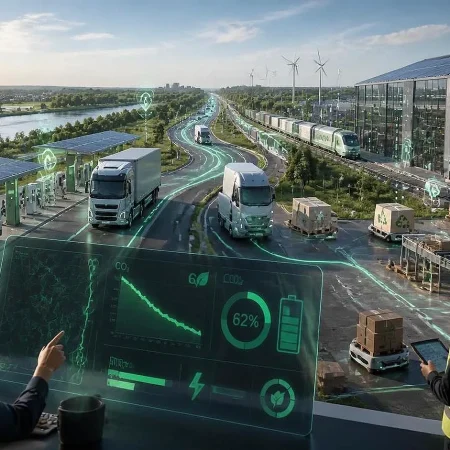
- Carbon Footprint Reduction: Measurable reduction in greenhouse gas emissions and carbon footprint from waste collection logistics and operations through optimized routing, reduced vehicle utilization, and transition from landfill-based waste disposal to integrated waste treatment and material recovery. Projected annual reduction: 10,700–16,800 tonnes CO₂e in Year 1; scaling to 25,000–35,000 tonnes CO₂e annually by Year 3.
- Landfill Reduction and Closure: Direct contribution to the elimination of landfill dependency and transition to integrated waste management systems. Landfill diversion target: reduction from current 35–40% landfill dependency to <20% by Year 3, aligned with EU Waste Framework Directive (2008/98/EC) targets and Portuguese Decree-Law 102/2020 implementation objectives.
- Material Recovery and Resource Protection: Promotion of material recovery and waste valorization reduces extraction of virgin materials, protects natural resources, and decreases landfill dependency, supporting Portugal’s Circular Economy Strategy 2025–2030 objectives and the EU 2050 Net Zero decarbonization targets. Projected material recovery increase: from 25–35% to 55–65% by Year 3.
- Ecosystem Protection: Improved waste management practices and reduced landfilling directly protect groundwater resources, air quality, and coastal ecosystems (particularly Porto region) from contamination and environmental degradation, supporting EU Environmental Directives and Portugal’s environmental protection commitments.
Economic Impact and Industrial Development
- Creation of Waste-Based Circular Economy Industry: The digital circular economy platform enables the emergence of new industries centered on material recovery, waste valorization, and secondary raw material markets, creating measurable economic value from waste streams. Projected market expansion: secondary raw materials market growing from €20–30 million to €40–60 million annually by Year 3.
- Municipal Revenue Optimization: Improved collection efficiency (30–50%) and transparent billing directly increase municipal and regional revenues from waste management services, creating financial resources for infrastructure modernization and service improvement. Projected annual municipal revenue improvement: €18–26 million across Aveiro-Porto region by Year 3, enabling 95–100% cost recovery.
- Operational Cost Reduction: Private sector waste operators (LIPOR, VALORMINHO, AMBISOUSA) benefit from 10–20% operational cost reductions through route optimization, predictive maintenance, and reduced administrative burden, improving business profitability and competitiveness. Estimated annual savings: €15–20 million for major municipal waste operators.
- Green Jobs and Technical Capacity Development: The transition to digital waste management and circular economy infrastructure creates skilled employment opportunities in technology deployment, data analytics, waste processing, and material recovery operations. Projected job creation: 150–250 new jobs in Aveiro-Porto region by Year 3, with estimated annual payroll of €5.3–8.4 million across technical, operational, and support roles.
- Industrial Competitiveness and EU Integration: Implementation of EU Regulation 2020/1056 (eFTI) and digital logistics infrastructure boosts national industry competitiveness through efficient, sustainable logistics aligned with Portugal’s EU Digital Decade priorities and industrial modernization objectives, reducing supply chain costs and improving delivery timelines. Enhanced export competitiveness: projected waste/recycling exports growing from €180–220 million to €250–320 million annually by Year 3.
Social Impact and Inclusive Development
- Improvement of Public Services: Citizens and businesses experience improved waste management service quality, transparency, and responsiveness through digital platforms, real-time service tracking, and direct engagement channels via mobile applications supporting source separation, collection scheduling, and service feedback.
- Enhanced Transparency and Accountability: Real-time data visibility and digital reporting mechanisms enable transparent governance, evidence-based policy implementation, and accountability of public and private sector actors in waste management. Integration with Portuguese public data platforms (portal.gov.pt, ChaveDigital) ensures citizen accessibility and institutional oversight.
- Social Inclusion and Formalization: The digital circular economy platform creates structured opportunities for informal waste collection actors (estimated 300–500 workers in Aveiro-Porto region) to integrate into the formal economy with training, certification, and formal economic participation through documented waste segregation, material recovery, and cooperative enterprise models, enhancing social inclusion and dignity of work. Wage formalization: €400–600/month (informal) → €1,200–1,600/month (formal sector rates).
- Citizen Participation in Sustainability: Mobile applications and digital engagement platforms enable citizens and businesses to participate actively in waste segregation, environmental stewardship, and circular economy participation, building a culture of sustainability. Projected mobile app adoption: 40–60% of household population in Aveiro-Porto (300,000–400,000 active users) by Year 3, with 15–25% improvement in source separation compliance through transparency and gamification.
Logistical and Trade Impact
- Consolidation as Southern European Logistics Hub: Implementation of EU Regulation 2020/1056 (eFTI) establishes Portugal as a world-class regional logistics hub in Southern Europe with robust, transparent digital infrastructure harmonized with EU standards and international best practices, attracting regional and international logistics operators and service providers. Strategic position strengthened for trade facilitation with Spain, France, and broader EU logistics networks.
- Enhanced Supply Chain Security and Traceability: Real-time digital tracking and standardized data elements improve security, traceability, and transparency in the transport of goods and hazardous waste across Portugal and EU cross-border supply chains. Basel Convention compliance strengthened through automated hazardous waste documentation integration with eFTI systems.
- Customs Efficiency and Trade Facilitation: Digitized import/export procedures and mandatory electronic transport documentation reduce customs processing times (estimated 2–4 day acceleration per shipment), lower transaction costs for businesses, and improve Portugal’s Logistics Performance Index (LPI). Automated pre-clearance mechanisms expected to reduce physical inspections by 40–50% for compliant operators.
- International Trade Competitiveness: Full interoperability with European and international logistics standards (EU eFTI, ISO digital standards, customs systems) positions Portuguese companies and operators for seamless participation in EU supply chains and enhanced competitiveness in international trade. Waste shipment documentation standardization with Spain and France accelerates cross-border waste valorization supply chains and secondary materials market development.
Strategic Positioning and Regional Leadership
- Portugal as Digital and Environmental Transformation Leader in Southern Europe: Successful implementation positions Portugal as a regional and EU demonstrator of integrated digital transformation for circular economy development and logistics modernization, attracting international recognition, partnerships, and investment. Potential for Horizon Europe research collaboration and peer-to-peer learning partnerships with other Southern European countries.
- Replicability Across Southern Europe and EU: The model is designed to be scalable nationwide (all Portuguese municipalities) and replicable across other Southern European countries (Spain, Italy, Greece) facing similar waste management and logistics challenges, positioning Portugal as a knowledge hub and regional leader in sustainable development. Template documentation and best practices shareable with EU Commission (DG ENV, DG MOVE) for broader Member State adoption.
- Support for Portugal’s European Integration and National Development Objectives: Direct contribution to long-term national and EU development objectives including European Green Deal alignment, Circular Economy Action Plan targets (65% waste treatment by 2030), eFTI Regulation 2020/1056 compliance (by 9 July 2027), Portugal 2030 national strategy, and European Digital Decade priorities for sustainable industrial competitiveness and environmental leadership.

6. Implementation Roadmap and Timeline
The successful execution of this integrated transformation requires a carefully structured, phased implementation approach, aligned with EU eFTI Regulation 2020/1056 compliance deadline (9 July 2027) and Portugal’s Circular Economy Strategy 2025–2030 milestones:
Phase 1: Foundation and Pilot Development (Months 1-6)
- Stakeholder engagement and formal partnership agreements with Agência Portuguesa do Ambiente (APA), Instituto da Mobilidade e dos Transportes (IMT), CCDR Centro, CCDR Norte, Aveiro Municipality, Porto Municipality, and major waste operators (LIPOR, VALORMINHO, AMBISOUSA).
- Detailed technical design and localization of the digital waste management platform for Aveiro pilot area, including integration with Portuguese municipal waste management systems and existing databases (InfoResíduos).
- eFTI regulatory implementation planning and consultation with IMT and customs authorities (AT) to ensure full alignment with EU Regulation 2020/1056 requirements and national transposition frameworks (Decreto-Lei 102/2020).
- Recruitment and training of project management and technical implementation teams, aligned with Portuguese vocational training standards (IEFP programs).
- Procurement and deployment of IoT monitoring infrastructure and digital platform software, including integration with European connectivity standards and data protection (GDPR) compliance mechanisms.
Phase 2: Pilot Implementation and Validation (Months 7-18)
- Launch of waste management digital platform in Aveiro with selected waste operators (VALORMINHO, municipal services) and Aveiro Municipality, including real-time waste collection tracking, bin monitoring, and operator accountability systems.
- Deployment of real-time tracking, route optimization, and transparent billing systems; testing of circular economy marketplace features connecting waste generators, waste processors (LIPOR), material recovery facilities, and secondary materials buyers.
- eFTI implementation execution in Aveiro pilot, including mandatory electronic transport documentation for waste shipments, hazardous waste tracking, and cross-border waste valorization transactions with Spain and France. Formal reporting to IMT and EU Commission on implementation progress.
- Monitoring, measurement, and continuous improvement of platform functionality based on real-world operational feedback; documentation of efficiency gains (target: 30–50% collection efficiency improvement) and cost reductions (target: 10–20% operational cost savings).
- Documentation of lessons learned and optimization recommendations for Porto scaling phase; preparation of cross-municipal coordination protocols for multi-jurisdictional waste management systems.
Phase 3: Scaling and Regional Expansion (Months 19-36)
- Launch and expansion of the digital waste management platform in Porto, incorporating optimization insights from Aveiro pilot; integration with Porto’s existing waste management infrastructure and LIPOR’s regional operations.
- Full eFTI Law implementation and harmonization across Aveiro and Porto pilot regions; phased rollout to other Portuguese municipalities in CCDR Centro and CCDR Norte regions. Compliance validation with EU eFTI deadline (9 July 2027) reporting to IMT and EU Commission.
- Validation of operational efficiency gains, cost savings, and environmental impact metrics (target: 10,700–16,800 tonnes CO₂e reduction Year 1; 25,000–35,000 tonnes CO₂e annually by Year 3); third-party environmental impact assessment aligned with EU Circular Economy Action Plan measurement frameworks.
- Development of training programs and certification standards for waste management personnel, logistics professionals, and digital platform operators, aligned with Portuguese national qualifications framework (EUROPASS) and IEFP vocational standards.
- Engagement with development partners (EBRD, EIB, GCF, CEF funding mechanisms) and private sector stakeholders for expansion financing and operational scaling; preparation of financial mechanisms documentation (Taxa de Resíduos, EPR funding integration) for municipal revenue optimization.
Phase 4: Nationwide Integration and Sustainability (Months 37+)
- Nationwide rollout of digital waste management platform across all Portuguese municipalities and regions with localized adaptation for regional waste management contexts, inter-municipal cooperation agreements, and municipal associations (AMRCCN, AMUC).
- Full compliance and integration of EU Regulation 2020/1056 (eFTI) implementation across Portugal and all transport modes; establishment of automated cross-border data exchange with Spain (waste valorization supply chains) and France (hazardous waste management coordination).
- Establishment of permanent governance structure (Public-Private Partnership for Integrated Waste Management—PPPIGR) for long-term operation, financial management, and regulatory oversight, with formal representation from APA, IMT, municipalities, LIPOR, VALORMINHO, AMBISOUSA, and industry associations.
- Integration with European and international logistics networks (EU eFTI network, international circular economy platforms); scaling of circular economy industries and secondary raw materials market (projected €40–60 million annually by Year 3), including formalizing partnerships with Spanish and French waste valorization operators.
- Continuous monitoring, performance measurement, and annual reporting to APA, IMT, CCDR regions, and EU Commission on achievement of Circular Economy Action Plan targets (65% waste treatment by 2030), eFTI compliance metrics, and contribution to Portugal’s 2030 national climate and digital transformation objectives.

7. Alignment with Portugal's Strategic Priorities and EU Objectives
This integrated proposal directly supports and advances multiple critical Portuguese national and EU-level developmental priorities:
| Portugal / EU Strategic Initiative | Alignment and Contribution |
|---|---|
| Portugal 2030 National Strategy and European Green Deal | Direct contribution to sustainable development, environmental protection, and economic competitiveness objectives through digital transformation of critical infrastructure sectors (waste management and logistics), aligned with EU climate and digital leadership ambitions. |
| EU 2050 Net Zero Decarbonization and Portugal Climate Targets | Measurable reduction in greenhouse gas emissions from waste and logistics sectors (10,700–16,800 tonnes CO₂e Year 1; 25,000–35,000 tonnes CO₂e annually by Year 3); transition from landfill dependency to integrated waste treatment and material recovery; support for EU 2030 55% emissions reduction target and Portugal’s sectoral decarbonization commitments. |
| Portugal’s Circular Economy Strategy 2025–2030 | Direct advancement of waste reduction, material recovery, waste valorization, and circular economy industry development; creation of measurable economic value from waste streams (€20–60 million secondary materials market by Year 3); support for 65% waste treatment target by 2030. |
| EU Waste Framework Directive (2008/98/EC amended 2018/851/EU) and Portuguese Decree-Law 102/2020 | Facilitation of effective implementation of mandatory waste management targets (65% treatment by 2030, <20% landfill dependency, 99% hazardous waste treatment); provision of digital infrastructure for compliance monitoring, reporting, and transparent governance across Portuguese municipalities and regions. |
| EU Regulation 2020/1056 (eFTI) and Portugal’s Digital Logistics Modernization | Full compliance with mandatory eFTI implementation (9 July 2027 deadline); boost to national industrial competitiveness through EU-harmonized digital logistics infrastructure, supply chain optimization, and reduced operational costs for manufacturing, waste valorization, and trade sectors; positioning Portugal as EU southern logistics hub. |
| European Digital Decade and Portugal’s Digital Transformation Priorities | Consolidation of Portugal as a regional leader in digital waste management and circular economy innovation; enhancement of customs efficiency and trade facilitation aligned with EU digital standards; development of new waste-based industries and circular economy value chains; integration with European logistics networks and Horizon Europe research collaboration opportunities. |
| EU Circular Economy Action Plan and Material Recovery Targets | Direct contribution to EU ambitions for secondary raw materials markets, critical minerals recovery, and resource efficiency; support for cross-border waste valorization with Spain and France; alignment with European Industrial Strategy and competitive positioning in global green supply chains. |

Next Steps: Engaging Our Proposal
We welcome the opportunity to present this integrated digital transformation initiative to the relevant Portuguese and EU authorities, regional stakeholders (CCDR Centro, CCDR Norte), municipalities (Aveiro, Porto), major waste operators (LIPOR, VALORMINHO, AMBISOUSA), and potential development partners. We invite interested parties to contact us to receive comprehensive documentation, including:
- Project overview and detailed technical feasibility analysis aligned with Portuguese waste management frameworks and EU eFTI requirements
- Executive summary and financial modeling (€1.8 million investment; €300,000–€500,000 annual savings; €40–60 million secondary materials market by Year 3)
- Team credentials and technical expertise overview in digital waste management, circular economy implementation, and EU logistics modernization
- Detailed implementation roadmap and eFTI Regulation 2020/1056 compliance frameworks (9 July 2027 deadline)
- Case studies and references from European and international digital government and waste management implementations
- Funding pathway documentation (EBRD, EIB, CEF, GCF mechanisms) and municipal revenue optimization strategies (Taxa de Resíduos, EPR funding)
Contact Information
| Organization | Location | Contact Details |
|---|---|---|
| The Solomon Brokerage Firm | Tallinn, Estonia | Email: info@solomonbrokerage.com Phone: +372 5332 9390 Website: www.solomonbrokerage.com |
We remain available to discuss the details of our proposal, answer technical questions, and explore partnership opportunities with the Agência Portuguesa do Ambiente (APA), Instituto da Mobilidade e dos Transportes (IMT), regional coordination commissions (CCDR Centro, CCDR Norte), municipalities (Aveiro, Porto), waste management operators (LIPOR, VALORMINHO, AMBISOUSA), and development partners committed to advancing Portugal’s circular economy and digital logistics transformation aligned with European Green Deal and EU 2030 strategic objectives.
© 2026 European Digital Trade Center (EDTC) / The Solomon Brokerage Firm (Estonia). All Rights Reserved.