














Digital Logistics Specialist
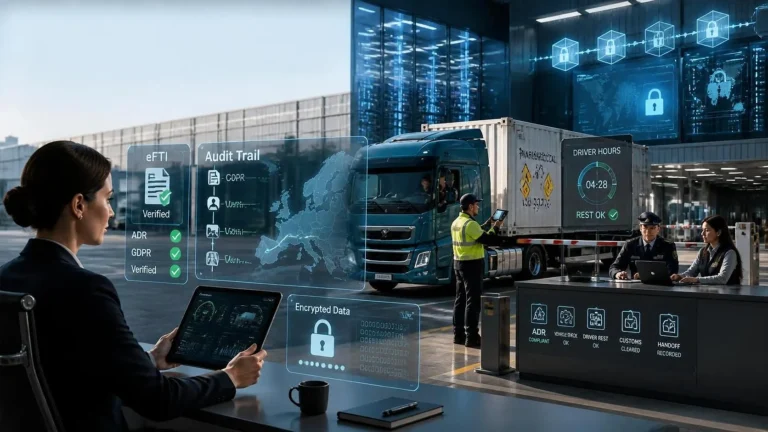
Build the practical digital, operational, and analytical skills required to coordinate modern logistics activities across transport, warehousing, and supply chain environments. This pathway prepares learners to improve visibility, use logistics data, support electronic freight information processes, and contribute to secure, efficient digital operations.


The Digital Logistics Specialist pathway is designed for professionals who want to understand how technology, data, transportation, and warehouse operations work together to create more visible, responsive, and efficient logistics networks. Learners begin with the foundations of digital logistics before progressing into transport coordination, warehouse management systems, electronic documentation, and performance measurement.
Throughout the pathway, participants work with practical workflows, operational scenarios, logistics KPIs, data examples, and digital tools used in modern supply chains. They learn how to support track-and-trace processes, interpret logistics data, understand electronic freight information concepts, and identify cybersecurity risks affecting fleets, warehouses, freight platforms, and supply chain partners.
The pathway concludes with an applied project in which learners develop a practical digital logistics improvement plan. The project may address warehouse visibility, transport performance, data quality, electronic documentation, cybersecurity awareness, or the integration of logistics systems. It is suitable for logistics coordinators, warehouse professionals, transport operators, freight forwarders, supply chain staff, and professionals preparing to take on digital operations responsibilities.
Pathway overview
The Digital Logistics Specialist pathway was created because logistics is rapidly becoming a data-driven, digitally connected business function. Transport operators, warehouses, freight forwarders, ports, manufacturers, retailers, and logistics service providers increasingly need professionals who understand not only the physical movement of goods, but also the systems, data, electronic documents, cybersecurity controls, and performance indicators that support modern logistics.
This pathway gives learners a practical understanding of how digital technologies improve visibility, coordination, efficiency, and decision-making across the logistics process. It connects transportation operations and warehouse management with data analytics, electronic freight information, digital documentation, and cybersecurity awareness.
The pathway is particularly relevant to EDTC’s wider objective of supporting interoperable and transparent trade and logistics processes across European and international markets.
Learners will develop the ability to:
- Explain the main principles of digital logistics and connected supply chains.
- Understand transportation planning, dispatching, load coordination, and delivery performance.
- Describe how warehouse management systems support receiving, storage, picking, packing, and dispatch.
- Interpret logistics KPIs and basic operational dashboards.
- Identify data-quality issues affecting logistics visibility and reporting.
- Understand the purpose and operational relevance of electronic freight information.
- Recognize the role of electronic documentation and data exchange in logistics workflows.
- Identify common cybersecurity risks affecting fleets, warehouses, freight platforms, and logistics partners.
- Support communication between operations teams, technology providers, and business managers.
- Analyze a logistics process and recommend realistic digital improvements.
- Prepare a practical digital logistics improvement plan.
Who this pathway is aimed at
This pathway is aimed at:
- Logistics coordinators and operations staff.
- Transport planners and dispatchers.
- Warehouse supervisors and distribution-center personnel.
- Freight forwarders and logistics-service providers.
- Supply chain professionals.
- Fleet and delivery managers.
- Port, terminal, and transport-support staff.
- SME owners introducing digital logistics systems.
- Technology professionals working with logistics clients.
- Professionals moving into digital operations roles.
It is suitable for learners with practical logistics experience as well as professionals who understand business operations but are new to digital logistics.
Entry requirements
Learners should ideally have:
- Basic familiarity with business or logistics operations.
- General computer and internet skills.
- An interest in transport, warehousing, supply chain, or digital systems.
- The ability to read practical business documents and follow process workflows.
- No advanced programming or technical systems-administration knowledge is required.
What learners should expect
Learners should expect a practical and operational pathway rather than a purely technical IT program. Activities may include interpreting logistics data, reviewing process maps, identifying operational risks, analyzing scenarios, completing knowledge checks, and preparing an applied project.
The final project requires learners to design a digital logistics improvement plan for a realistic operation. Successful completion demonstrates the ability to connect logistics processes with digital tools, data, documentation, performance measurement, and security awareness.
Course Overview
- Course 1
Digital Logistics Fundamentals (Foundation)
Learn how European digital logistics works from end to end. This beginner-friendly foundation course introduces freight transport modes, electronic documents, customs procedures, port single windows,...
- Course 2
Digital Skills for Trade and Logistics (Foundation)
Build practical digital skills for trade, logistics, and supply chain work. This beginner-friendly course introduces business systems, digital documents, data, cloud tools, communication, cybersecurity, electronic...
- Course 3
Introduction to European Digital Trade (Foundation)
Learn how European digital trade works from end to end. This beginner-friendly foundation course introduces cross-border trade, logistics, customs, digital documents, payments, data, cybersecurity, sustainability,...
- Course 4
Cybersecurity Awareness for Trade and Logistics (Foundation)
Learn how to recognize and reduce cybersecurity risks in trade and logistics. This beginner-friendly course covers phishing, passwords, malware, social engineering, data protection, incident reporting,...
- Course 5
Supply Chain Fundamentals (Foundation)
Understand how modern supply chains work from supplier to customer. This beginner-friendly course introduces procurement, planning, inventory, warehousing, transportation, distribution, technology, sustainability, risk, and supply...
- Course 6
Orientation to the EDTC Ecosystem (Foundation)
Orientation to the EDTC Ecosystem is the mandatory, free gateway course for all professionals, business managers, entrepreneurs, logistics operators, students, and public-sector stakeholders entering the...




Related Collection
 Learning Path
International Trade and Customs Specialist
Develop the knowledge needed to support import, export, customs, documentation,...
 Learning Path
Digital Marketplace and Logistics Services Manager
Learn how to operate, promote, govern, and improve a digital...
 Learning Path
Cybersecurity, Risk and Business Resilience Specialist
Develop the practical capabilities needed to identify cyber, operational, supplier,...
 Learning Path
Sustainable Supply Chain Specialist
Learn how to integrate sustainability, carbon management, circular economy principles,...