













Sustainable Supply Chain Specialist
Learn how to integrate sustainability, carbon management, circular economy principles, responsible procurement, and resilience into supply chain operations. This pathway enables professionals to identify improvement opportunities and create practical sustainability plans for logistics and business networks.

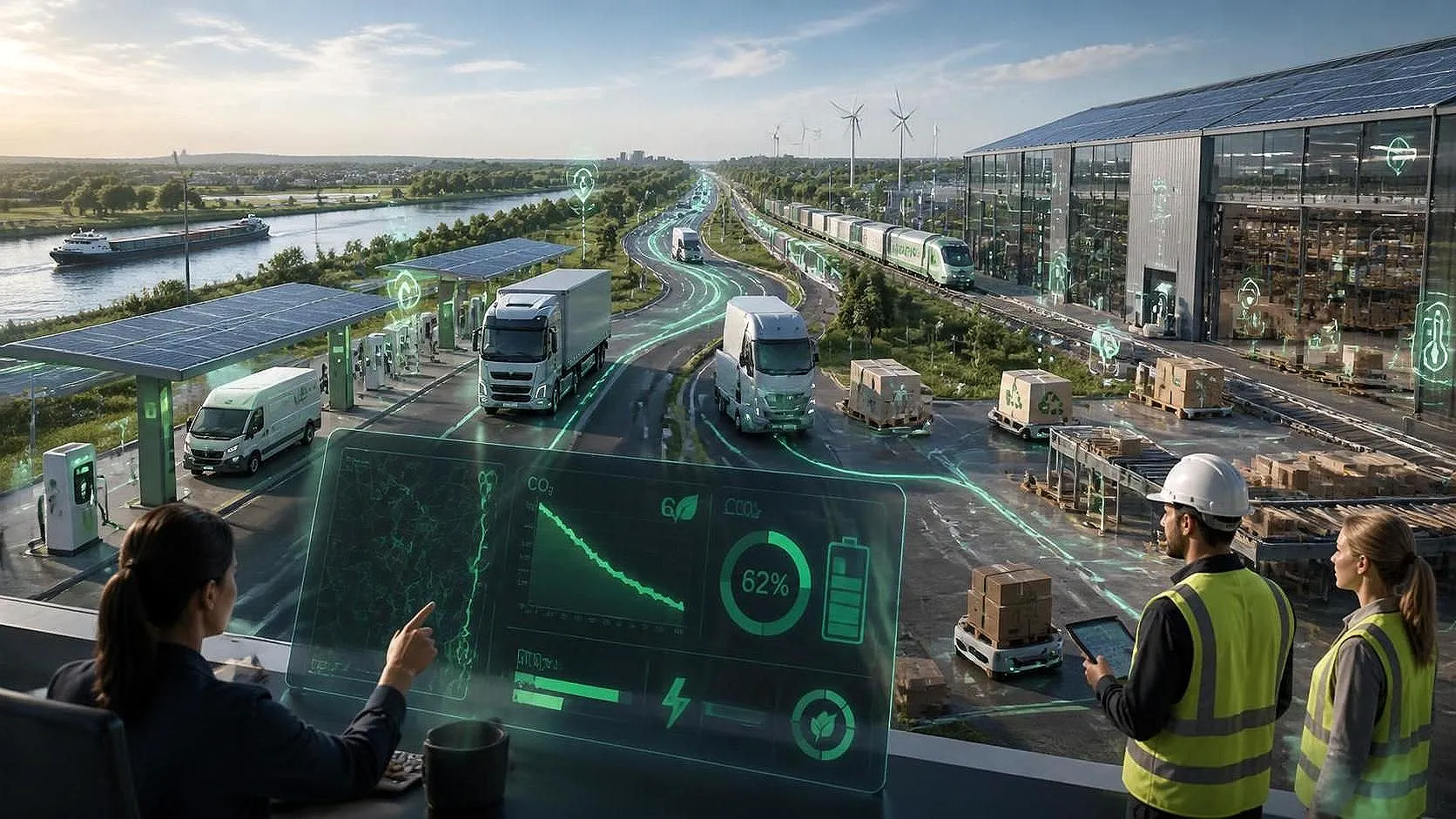
The Sustainable Supply Chain Specialist pathway helps learners understand sustainability as an operational, commercial, and strategic responsibility rather than as a stand-alone environmental topic. Participants explore how purchasing, transport, warehousing, inventory, packaging, reverse logistics, supplier relationships, and business continuity all influence sustainability performance.
The pathway introduces sustainable logistics practices such as route and load optimization, modal shift, energy efficiency, fleet transition, and sustainable warehousing. Learners also examine Scope 1, 2, and 3 emissions concepts, carbon data quality, sustainability metrics, supplier evaluation, responsible sourcing, circular business models, product recovery, repair, reuse, recycling, and reverse logistics.
Through practical examples and workplace scenarios, participants learn how to distinguish meaningful sustainability improvements from unsupported environmental claims. They develop the ability to collect relevant information, engage suppliers, identify climate and supply chain risks, and communicate progress using clear operational measures.
The final project is a sustainability improvement plan for a selected company, logistics operation, or supply chain. It may include baseline conditions, improvement objectives, carbon-related considerations, supplier actions, circularity opportunities, risk controls, implementation milestones, and measurement indicators.
Pathway overview
The Sustainable Supply Chain Specialist pathway was created because sustainability is now closely connected to logistics performance, procurement decisions, energy use, packaging, emissions data, supplier relationships, business continuity, and long-term competitiveness. Businesses need professionals who can translate sustainability goals into practical operational improvements.
EDTC designed this pathway to help companies move from general sustainability commitments to measurable action. Learners explore sustainable transport, carbon management, circular economy principles, reverse logistics, sustainable procurement, climate risk, supply chain resilience, and sustainability reporting.
The pathway is especially relevant to SMEs and international businesses that need practical methods for improving resource efficiency, responding to customer expectations, strengthening supplier relationships, and preparing reliable sustainability information.
Learners will develop the ability to:
- Explain the relationship between sustainability and supply chain performance.
- Identify opportunities to reduce fuel use, emissions, waste, and inefficient movement.
- Understand route optimization, load optimization, modal shift, and fleet-transition concepts.
- Explain the basic meaning of Scope 1, Scope 2, and Scope 3 emissions.
- Identify the importance of carbon-data quality and consistent measurement.
- Evaluate sustainability considerations in supplier selection.
- Include environmental and social criteria in procurement processes.
- Explain circular economy, product recovery, reuse, repair, refurbishment, and recycling.
- Understand the role of reverse logistics in circular supply chains.
- Identify climate-related risks affecting transport, warehouses, infrastructure, and suppliers.
- Recognize the difference between credible sustainability communication and unsupported environmental claims.
- Develop a practical sustainability improvement plan.
Who this pathway is aimed at
This pathway is suitable for:
- Supply chain managers and coordinators.
- Sustainability and ESG professionals.
- Procurement and sourcing teams.
- Logistics and transport managers.
- Warehouse and distribution-center managers.
- SME owners and business leaders.
- Environmental and quality personnel.
- Operations consultants.
- Manufacturers, retailers, and e-commerce companies.
- Professionals responsible for sustainability reporting or supplier engagement.
It is appropriate for both sustainability specialists and operational professionals who need to integrate sustainability into everyday business decisions.
Entry requirements
Learners should have:
- Basic knowledge of business, logistics, procurement, or supply chain operations.
- An interest in environmental improvement and responsible business practices.
- Basic digital skills for reviewing data, documents, and performance indicators.
- A willingness to apply sustainability concepts to a real or hypothetical business.
- No advanced carbon-accounting or environmental-science background is required.
What learners should expect
Learners should expect a practical pathway focused on implementation rather than abstract sustainability theory. Activities may include reviewing transport and procurement scenarios, identifying waste and emissions sources, examining supplier criteria, interpreting basic sustainability data, and designing improvement measures.
The final project requires a sustainability improvement plan. The plan may include baseline conditions, objectives, supply chain risks, emissions-related considerations, procurement actions, circular-economy opportunities, implementation milestones, and performance indicators.
Learners should understand that sustainability reporting and environmental requirements may vary by sector, jurisdiction, and reporting framework. Relevant regulatory and reporting content should always be maintained through scheduled reviews.
Course Overview
- Course 1
Business Fundamentals for SMEs (Foundation)
Build a practical foundation in small-business management. This beginner-friendly course covers business models, customers, marketing, sales, operations, finance, cash flow, people, technology, risk, sustainability, and...
- Course 2
Cybersecurity Awareness for Trade and Logistics (Foundation)
Learn how to recognize and reduce cybersecurity risks in trade and logistics. This beginner-friendly course covers phishing, passwords, malware, social engineering, data protection, incident reporting,...
- Course 3
Digital Logistics Fundamentals (Foundation)
Learn how European digital logistics works from end to end. This beginner-friendly foundation course introduces freight transport modes, electronic documents, customs procedures, port single windows,...
- Course 4
Digital Skills for Trade and Logistics (Foundation)
Build practical digital skills for trade, logistics, and supply chain work. This beginner-friendly course introduces business systems, digital documents, data, cloud tools, communication, cybersecurity, electronic...
- Course 5
Introduction to European Digital Trade (Foundation)
Learn how European digital trade works from end to end. This beginner-friendly foundation course introduces cross-border trade, logistics, customs, digital documents, payments, data, cybersecurity, sustainability,...
- Course 6
Supply Chain Fundamentals (Foundation)
Understand how modern supply chains work from supplier to customer. This beginner-friendly course introduces procurement, planning, inventory, warehousing, transportation, distribution, technology, sustainability, risk, and supply...
- Course 7
Trade Finance Fundamentals (Foundation)
Learn the fundamentals of financing and managing international trade. This beginner-friendly course explains letters of credit, documentary collections, open-account terms, cash in advance, working capital,...
- Course 8
Orientation to the EDTC Ecosystem (Foundation)
Orientation to the EDTC Ecosystem is the mandatory, free gateway course for all professionals, business managers, entrepreneurs, logistics operators, students, and public-sector stakeholders entering the...







Related Collection
 Learning Path
Trade Finance and Working Capital Specialist
Build the financial knowledge required to support international transactions, manage...
 Learning Path
Digital Marketplace and Logistics Services Manager
Learn how to operate, promote, govern, and improve a digital...
 Learning Path
Quality, Projects and Operational Excellence Manager
Learn how to lead improvement projects, strengthen quality systems, manage...
 Learning Path
SME Digital Transformation Manager
Develop the strategic and practical skills needed to guide digital...